Best Skin Clinic in Seoul for Foreigners: What to Look For
Quick answer: The best skin clinic in Seoul for foreigners is one where a doctor consults you and performs or supervises your treatment, products and device tips are genuine and shown to you, prices are published with VAT and units stated, and English (or Japanese) support continues after you fly home. Location near your hotel or airport line helps too.
What makes a skin clinic good for foreigners in Seoul?
A good skin clinic for foreigners is one that gives you the same medical standards a local patient receives, explained in a language you understand, with prices you can check before you arrive. Seoul has hundreds of dermatology and aesthetic clinics, so “best” depends less on fame and more on whether the clinic suits your treatment, your trip length and your communication needs.
Instead of chasing rankings, use the criteria below. They apply whether you are searching in Hongdae, Gangnam, Myeongdong or Apgujeong, and they help you compare clinics fairly when you only have a few days in Korea.
Who will actually perform your treatment?
This is the first question to ask. In Korea, injectables such as Botox, fillers and skin boosters must be performed by a doctor, while some device treatments and facials may be carried out by trained staff under a doctor's supervision. Neither is automatically wrong, but you should know in advance.
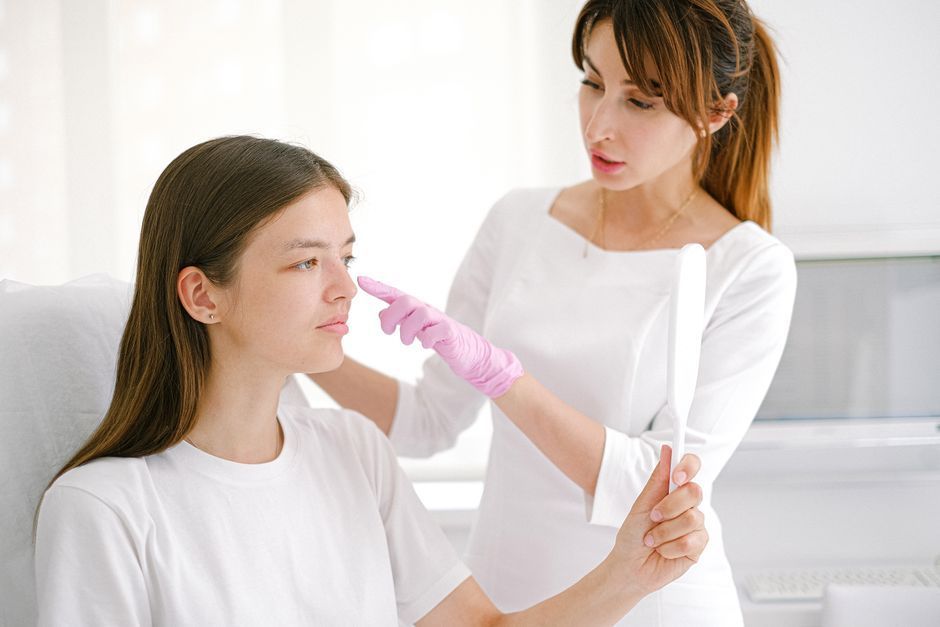
- Consultation: a doctor should examine your skin and confirm suitability, dose and number of sessions.
- Lifting devices: ask whether the doctor performs Ultherapy or Thermage FLX, because energy settings and line placement shape the result.
- Injectables: confirm the doctor injects personally, especially for dermal fillers near the eyes, nose or lips.
Doctor-performed treatments sometimes cost more, which is one reason prices vary so widely across Seoul.
How can you tell if products and device tips are genuine?
Genuine products are central to both safety and results. A trustworthy clinic is happy to show you what it is using before treatment begins.
Injectables
Ask to see the sealed box or vial for your toxin, filler or booster and to have it opened in front of you. You should be able to read the brand: for example Allergan Botox in Korea or Xeomin versus a Korean toxin such as Nabota or Botulax, or Juvederm versus a Korean filler. Each is legitimate, but the price should match what you receive.
Devices
For Ultherapy and Thermage FLX, ask how many lines or shots you are buying and whether a new genuine tip is used. Ultherapy Prime is the newer Ultherapy system, so if a clinic quotes “Ultherapy,” it is fair to ask which generation. If a quote sits far below typical Seoul ranges, ask why.
Does the clinic communicate clearly in English?
Language support is more than a friendly receptionist. Look for a clinic where the consultation itself can happen in English or Japanese, where consent forms and aftercare instructions are explained clearly, and where you can message the clinic after treatment.
- Can you book and ask questions by WhatsApp or KakaoTalk before you fly?
- Will someone explain possible side effects, such as bumps after Rejuran Healer or swelling after filler?
- If something worries you after you go home, can you send photos and get a reply?
Follow-up matters because some issues, such as an uneven filler result that might need filler dissolving, only appear after a few days.
Are the clinic's prices transparent?
Korean clinics are known for published price lists, which makes comparison easier for English-speaking visitors. A transparent price tells you exactly what you are buying: number of Ultherapy lines, Thermage shots, Botox units or filler cc; whether numbing cream and aftercare are included; and whether the 10% VAT usually added to cosmetic procedures is included. Monthly promotions are common, but a promotion should still list the same details.
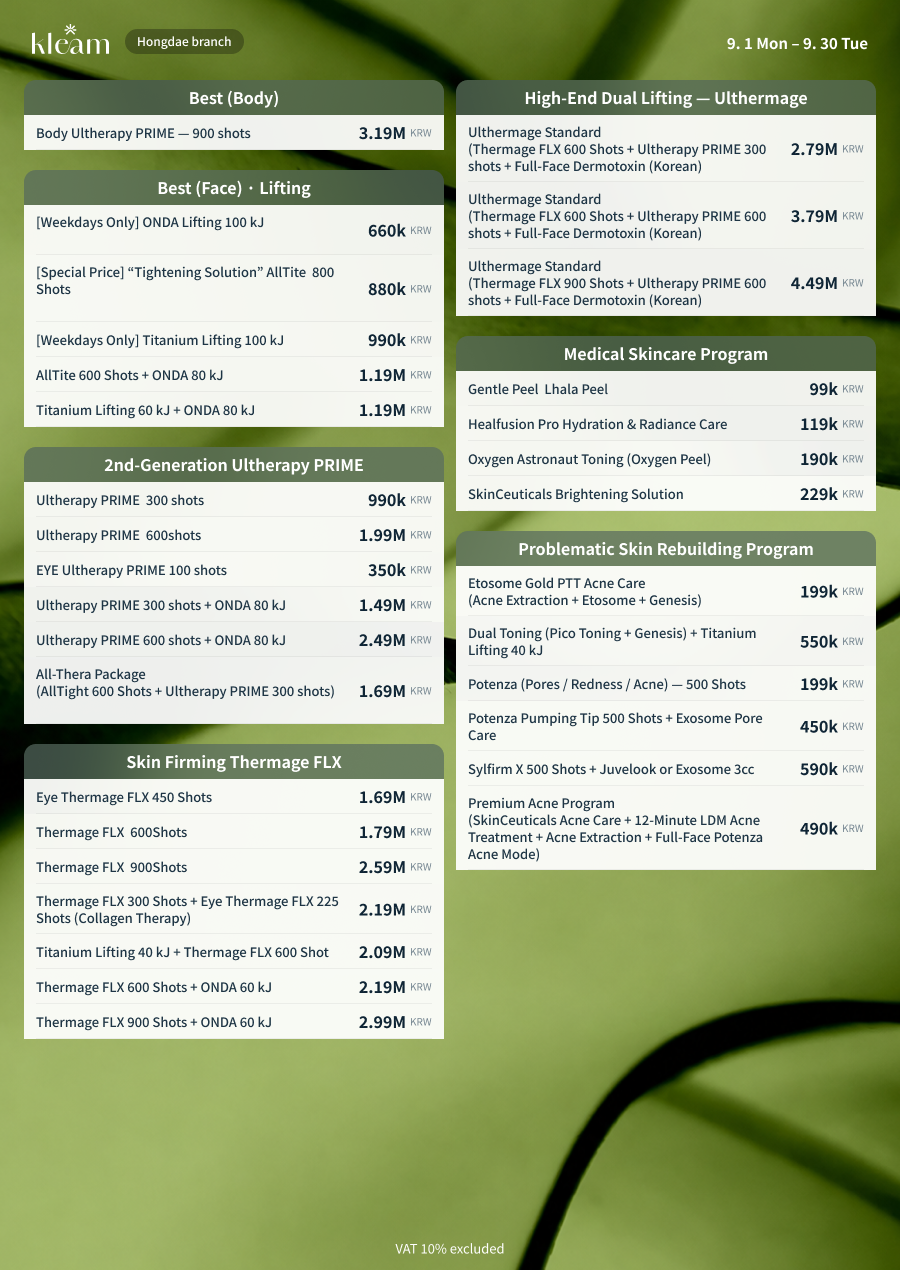
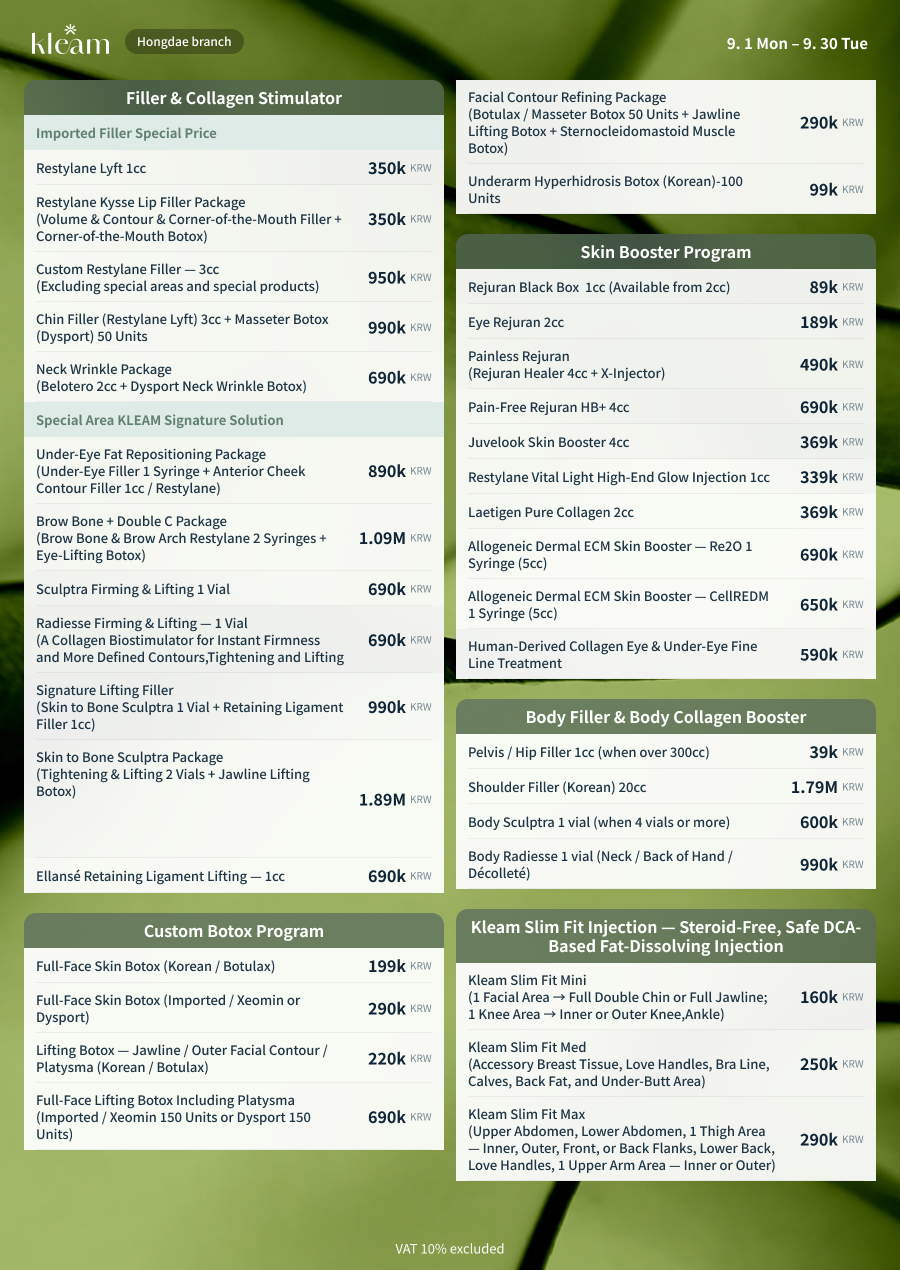
As a reference, in Seoul in 2026, Ultherapy 300 lines typically costs about KRW 800,000–1,800,000 (roughly US$570–1,290), and forehead Botox with a Korean toxin about KRW 30,000–100,000 (roughly US$20–70). You can compare these ranges with current price list.
What should you compare between clinics?
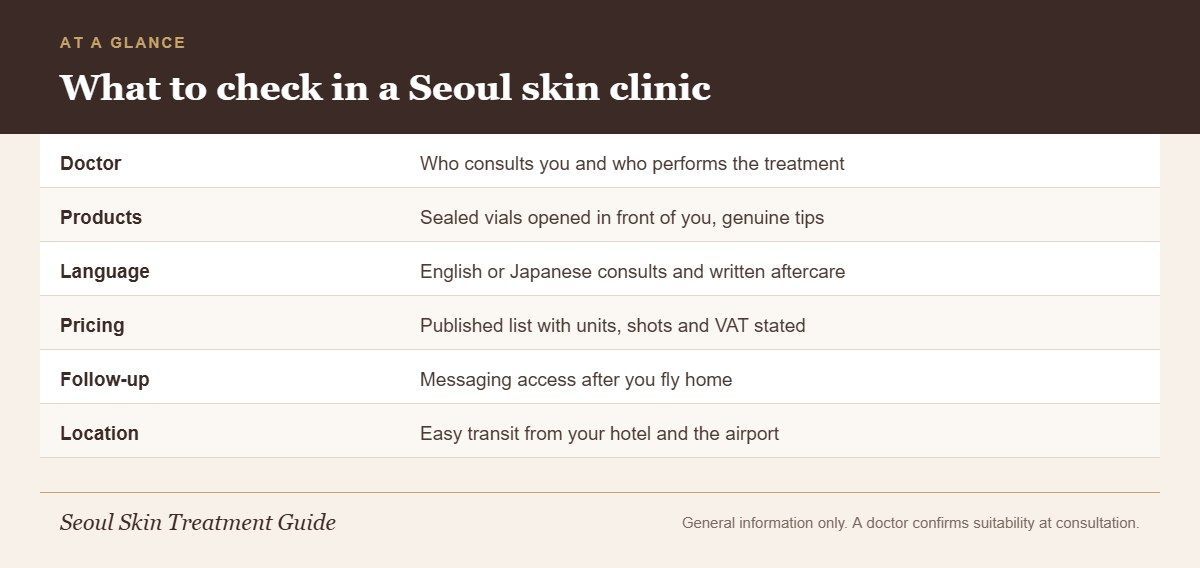
Use this table when you shortlist two or three clinics in Seoul.
| What to check | Why it matters | How to check |
|---|---|---|
| Doctor involvement | Dose, settings and placement decide results | Ask who consults and who treats |
| Genuine products | Safety and predictable outcomes | See the sealed vial, tip or shot counter |
| Price detail | Avoids surprises at checkout | Lines, shots, units, cc and VAT listed |
| Language support | Informed consent and safe aftercare | Message before booking and judge the reply |
| Treatment menu | Lets the doctor choose, not just sell one device | Review lifting, booster and laser options |
| Location and hours | Fits a tight travel schedule | Check subway lines, weekend hours and lunch breaks |
What red flags should foreigners watch for?
Most clinics in Seoul are professional, but a few warning signs are worth knowing. For a deeper look, read whether Korean skin clinics are safe for foreigners.
- No real consultation. You are taken straight to treatment without a doctor reviewing your skin and medical history.
- Pressure to upgrade. You are pushed into a bigger package or extra treatments on the spot.
- Vague product names. Staff cannot tell you which toxin, filler or device you are getting.
- Guaranteed results. No ethical doctor guarantees an outcome; results vary.
- No aftercare plan. You leave without written instructions or a way to contact the clinic.
Which area of Seoul should you choose?
Gangnam has the largest cluster of clinics and a wide price spread; Apgujeong and Cheongdam have a premium image and often higher prices; Myeongdong is central for shopping and hotels. Hongdae is popular with younger travelers and is linked by the AREX Airport Railroad directly to Incheon and Gimpo, and its clinic prices can be moderate compared with premium districts. Our guide to the best area for skin treatments in Seoul compares each district by traveler type.
Visiting a skin clinic in Hongdae, Seoul
If Hongdae suits your trip, Hongik Univ. Station is the main hub: it serves Subway Line 2, the Gyeongui–Jungang Line and AREX trains that run direct to Incheon and Gimpo airports. That makes it simple to book treatments close to arrival or departure day.
Ask whether English- or Japanese-speaking staff are available, and note that many clinics arrange consultations by WhatsApp or KakaoTalk. Send photos and your travel dates, then confirm who performs the treatment, the exact shots, units or cc, and whether VAT is included. Hongdae clinics cover lifting, injectables, skin boosters and lasers such as laser toning, so a doctor can suggest options rather than a single device. Compare quotes with the current Hongdae clinic price list, read about skin rejuvenation in Korea, and leave a buffer before your flight.
Frequently asked questions
How do I know if a Seoul skin clinic is legitimate?
Look for a clinic where a doctor consults you, products are opened in front of you, and prices list units, shots or cc with VAT clarified. A clear written aftercare plan and a way to contact the clinic later are good signs. Avoid places that skip consultation or promise guaranteed results.
Do I need to speak Korean to visit a skin clinic in Seoul?
No. Many clinics in Seoul offer English or Japanese support, and you can often book by WhatsApp or KakaoTalk. Still, confirm before booking that the consultation itself, not just reception, can be done in a language you understand, so you can give informed consent and follow aftercare correctly.
Are cheaper clinics in Seoul worse?
Not necessarily. Prices vary with location, device generation, product brand, doctor involvement and packages. A lower price can be fair, but ask what is included: lines or shots, genuine tips, the toxin brand, numbing and VAT. If a quote is far below typical Seoul ranges, ask the clinic to explain why.
Should I book a consultation before I arrive in Korea?
Yes, if your trip is short. Sending photos and goals in advance lets the doctor suggest a realistic plan, flag treatments with longer downtime and reserve a slot. Final decisions are still made in person, because the doctor needs to examine your skin and medical history.
Can I get follow-up care after I fly home?
Ask before treatment. A good clinic lets you message photos and questions after you leave Korea and explains which reactions are normal, such as bumps after boosters or mild swelling after filler. For anything urgent, see a local doctor and share the product names from your treatment record.
Related guides
This guide is general information for international visitors, not medical advice. A doctor confirms suitability, dosage and number of sessions at consultation. Prices are approximate Seoul market ranges and change over time — always check the clinic's current price list. Last updated: October 2026.