Are Korean Skin Clinics Safe for Foreigners?
Quick answer: Yes, Korean skin clinics are generally safe for foreigners. Korea has licensed doctors, regulated products and a very experienced aesthetic industry. Safety still depends on the clinic: choose one where a doctor assesses you, genuine products and device tips are used, your health history is checked, and aftercare is explained clearly in a language you understand.
Are Korean skin clinics safe for foreigners in general?
For most foreigners, Korean skin clinics are a safe place to get dermatology and aesthetic treatments. Seoul has a large number of doctors who perform Botox, fillers, lasers and lifting devices every day, and clinics are used to international patients. Doctors must hold a Korean medical license, and injectable products and devices are regulated by Korea’s Ministry of Food and Drug Safety.
That said, high volume and fast service can be both a strength and a risk. Treatment speed is useful on a short trip, but you still deserve proper screening, an honest recommendation and a clear explanation. If a clinic skips these steps, that is the clinic, not the country. Our guide Can Tourists Get Skin Treatments in Korea? covers the basics if this is your first trip.
What are the real risks of skin treatments?
Every medical aesthetic treatment carries some risk. Knowing the common ones helps you ask the right questions.
| Treatment | Common, usually temporary | What a careful clinic does |
|---|---|---|
| Botox | Small bruises, headache, rare uneven result | Maps muscles, uses appropriate units |
| Fillers | Swelling and bruising for 2–3 days | Knows facial anatomy, keeps hyaluronidase available |
| Lasers | Redness, temporary darkening of pigment | Adjusts settings to skin type and tan |
| HIFU and RF lifting | Tenderness, mild swelling for 0–1 day | Uses genuine tips, avoids risky zones |
| Skin boosters | Bumps for 24–48 hours, small bruises | Sterile technique, clear aftercare |
Serious complications are uncommon but possible. With dermal fillers in Korea, for example, a well-prepared clinic can respond quickly, including filler dissolving injections with hyaluronidase when needed.
How can you tell whether a Seoul clinic is safe?
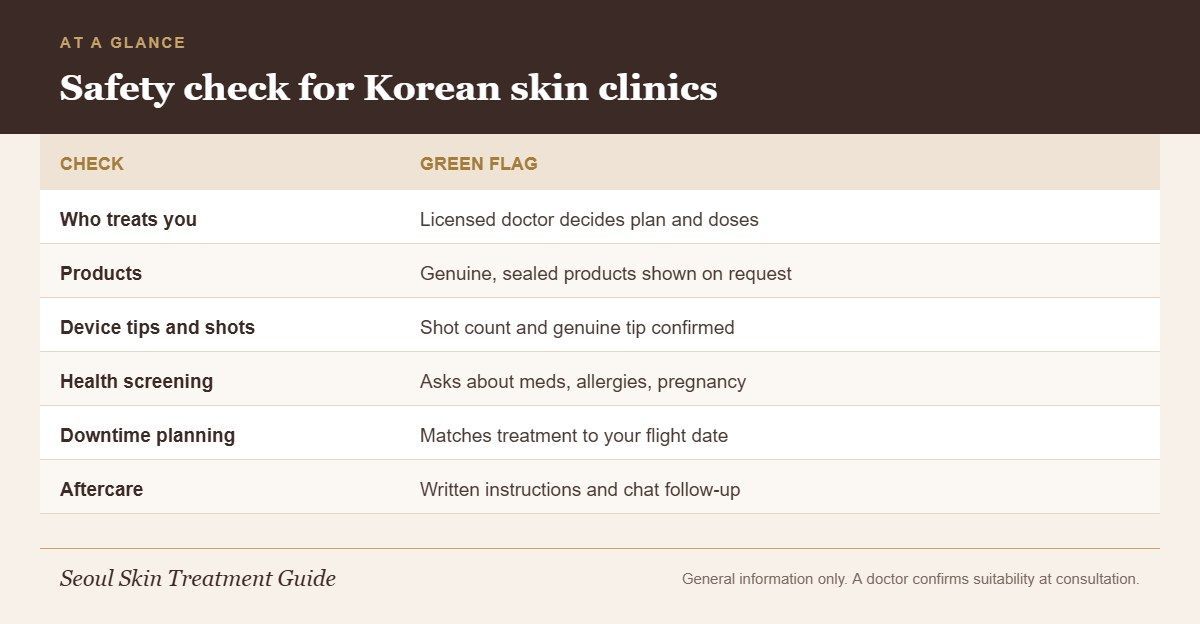
Use this numbered checklist before and during your visit:
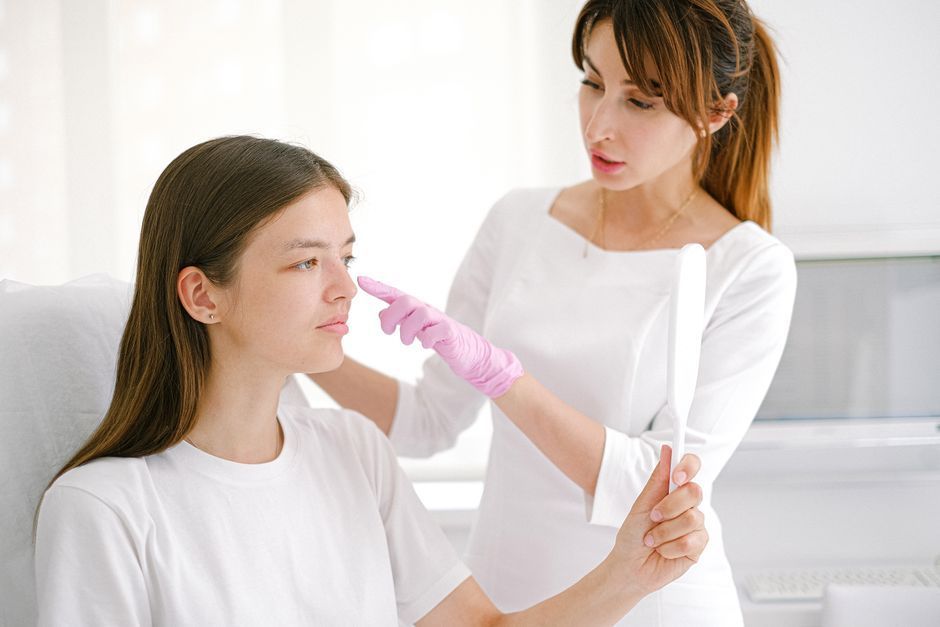
- A doctor assesses you. Suitability, dose, shots and sessions should be confirmed by a licensed doctor, not decided only by a counselor.
- Your health history is checked. Expect questions on medications, allergies, keloids, cold sores, pregnancy and breastfeeding.
- Products are genuine. It is reasonable to ask which toxin or filler brand is used, and to see the box or vial.
- Shot counts are clear. For Ultherapy in Seoul or Thermage FLX, ask how many lines or shots you will get and whether a genuine tip is used.
- The plan fits your travel. A careful clinic will steer you away from high-downtime treatments right before a flight.
- Aftercare is explained. You leave knowing what to do, what is normal and how to reach the clinic.
What red flags should foreigners watch for?
- Prices far below market. In Seoul in 2026, Ultherapy 100 lines typically costs about KRW 300,000–600,000 (roughly US$210–430), while generic HIFU full face is about KRW 50,000–300,000 (roughly US$36–210). If something sold as Ultherapy is priced like generic HIFU, ask what device and tip it is.
- No doctor consultation before an injection or laser.
- Pressure to buy large packages on the spot, especially multi-session packages you cannot use after flying home.
- Vague answers about units, cc, shots or brand.
- Strong treatments right before departure , such as CO2 fractional laser, which usually needs about 5–7 days for redness and crusting to settle.
- One-size-fits-all pigment plans. IPL can worsen melasma in some people, so melasma treatment needs careful selection and maintenance.
Compare prices honestly with the current price list of several clinics, remembering that 10% VAT is often added to cosmetic procedures.
What should you do if something feels wrong after treatment?
Some redness, swelling, bumps and mild bruising are expected, depending on the treatment. Contact the clinic promptly if you notice:
- Pain that gets worse instead of better, especially after fillers.
- Skin turning white, grey or dusky near an injection site.
- Blisters, oozing or signs of infection after lasers.
- Vision changes or severe swelling: seek urgent medical care immediately.
Save the clinic’s WhatsApp or KakaoTalk contact before you leave, and keep a record of products and doses for your doctor at home. Our aftercare guide for foreigners explains what is normal day by day.
Who should be extra careful?
- Pregnant or breastfeeding: most aesthetic injections and many lasers are postponed.
- Recent isotretinoin use, active infection, or a history of keloids.
- Very tanned or sunburned skin before laser treatments.
- Anyone on blood thinners, which can increase bruising.
Always tell the doctor. A safe clinic will adjust or delay treatment rather than proceed regardless.
Planning your visit to a skin clinic in Hongdae, Seoul
Hongik Univ. Station in Hongdae is on Line 2, the Gyeongui–Jungang Line and the AREX Airport Railroad, with direct trains to Incheon and Gimpo airports, so it is simple to return for a check before you fly.
- Language: ask for English- or Japanese-speaking staff who can explain your plan and aftercare.
- Consultation: many clinics take messages by WhatsApp or KakaoTalk. Send photos, your medication list and travel dates.
- Confirm details: who performs the treatment, the exact shots, units or cc, and whether VAT is included.
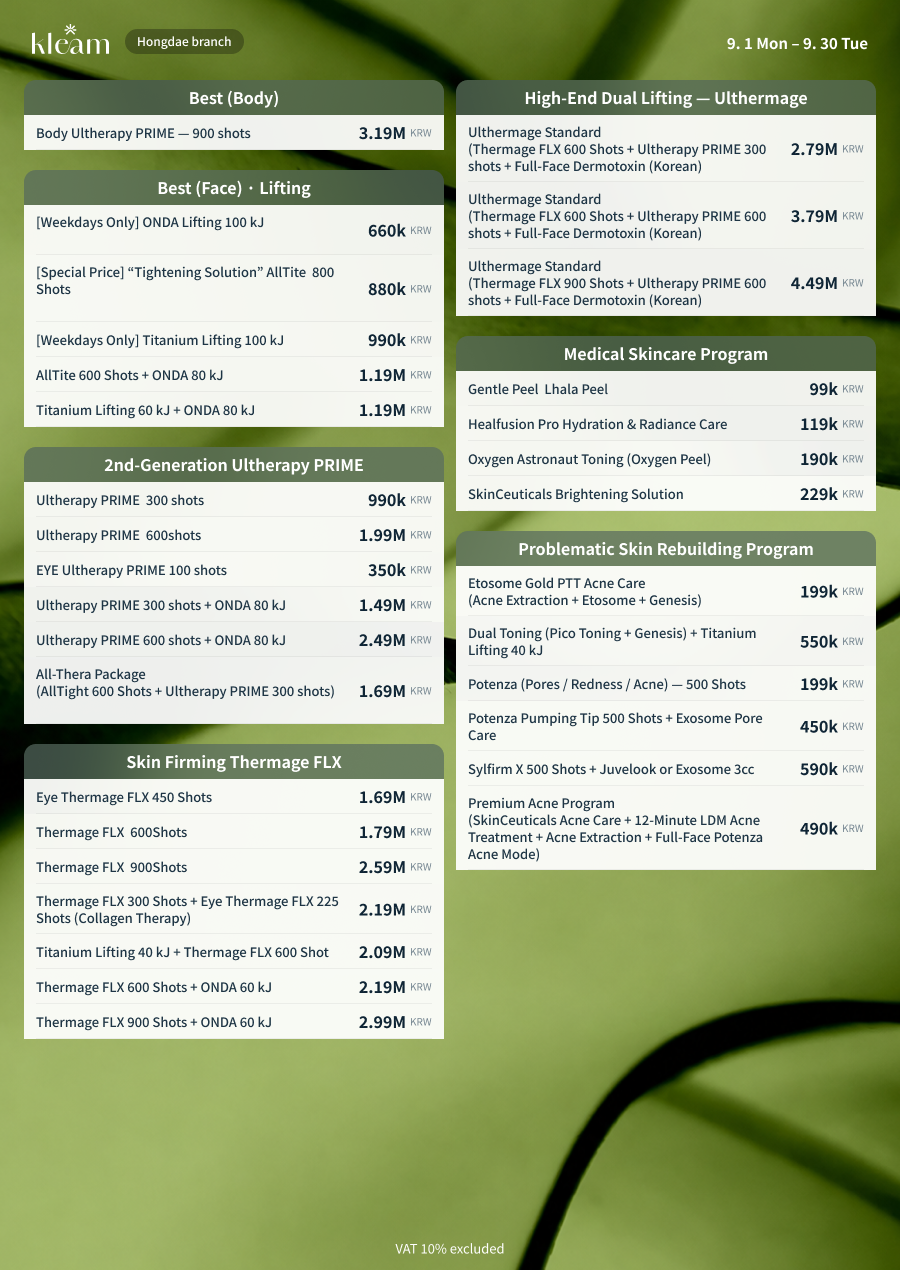
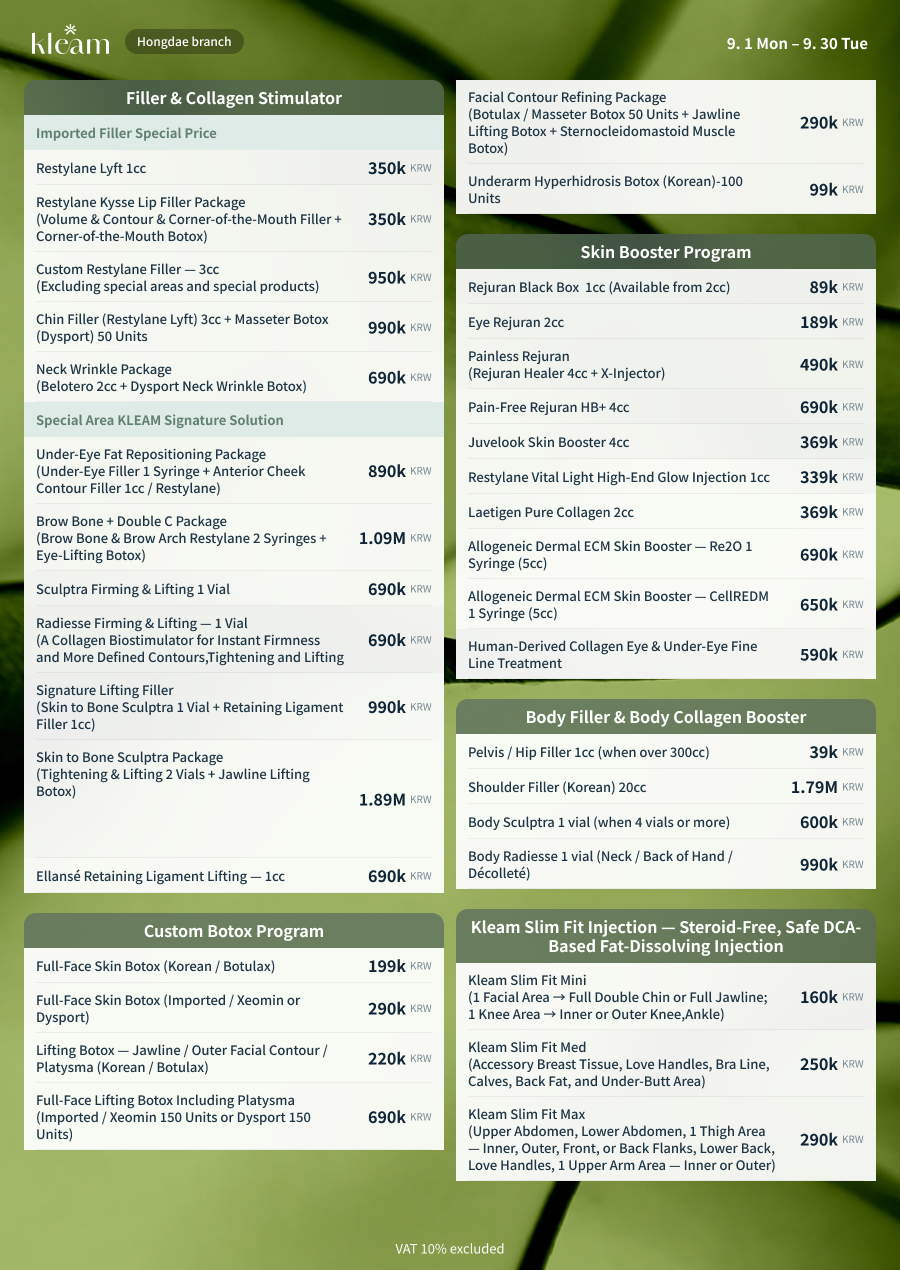
- Prices: check the current Hongdae clinic price list and ask about options such as Botox or chemical peels.
Leave a buffer before your flight and ask any safety question during consultation.
Frequently asked questions
Is it safe to get Botox in Korea as a tourist?
Botox in Korea is widely performed and generally safe when a doctor assesses your muscles and uses an appropriate dose. Results show in 3–7 days and peak at about 2 weeks. Flying the next day is usually fine. Avoid massage and saunas for 24–48 hours, and tell the doctor about any medications.
Are Korean fillers and toxins genuine?
Korean and imported products used in clinics are regulated by Korea’s Ministry of Food and Drug Safety. Korean toxins such as Nabota and Botulax and imported ones such as Botox and Xeomin are all widely used. You can ask which product is used and request to see the box or vial before treatment.
What if I have a complication after I fly home?
Message the clinic first with photos; many can advise remotely. Keep a record of the product, amount and date so a local doctor can help. For serious symptoms such as vision changes, severe pain or skin color change, seek urgent local care immediately rather than waiting.
Is a cheaper clinic less safe?
Not automatically. Price is shaped by area, device generation, genuine tips, units and whether a doctor performs the treatment. But prices far below Seoul market ranges deserve questions about products, shots and who treats you. Compare like for like, including whether 10% VAT is added.
Do I need travel insurance for skin treatments?
Many travel insurance policies exclude elective cosmetic procedures, so do not assume you are covered. Check your policy before you travel. Choosing low-downtime treatments, leaving buffer days before your flight and following aftercare reduces the chance you will need extra care abroad.
Related guides
This guide is general information for international visitors, not medical advice. A doctor confirms suitability, dosage and number of sessions at consultation. Prices are approximate Seoul market ranges and change over time — always check the clinic's current price list. Last updated: October 2026.