Pico Laser vs Laser Toning: Which Is Better for Dark Spots?
Quick answer: Pico laser is usually better for stubborn, well-defined dark spots and mixed pigment because its picosecond pulses break pigment into finer particles, often in fewer sessions. Laser toning (low-fluence Q-switched Nd:YAG) is better as a gentle, budget-friendly series for diffuse dullness and melasma maintenance. In Seoul, many clinics combine both in one toning plan.
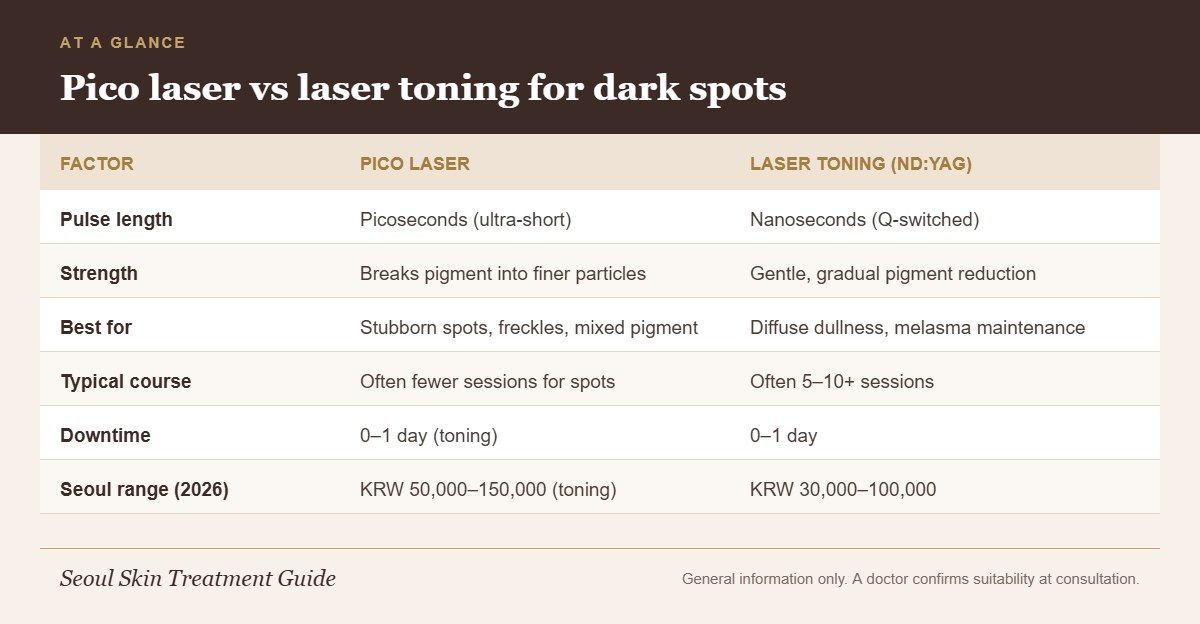
What is the difference between pico laser and laser toning?
Laser toning is a low-energy treatment with a Q-switched Nd:YAG laser that fires nanosecond pulses across the whole face to gradually reduce pigment and brighten skin. It is one of the most common maintenance treatments in Korea. Read about laser toning in Seoul.
Pico laser fires pulses about a thousand times shorter, in picoseconds. The faster pulse shatters pigment more finely with less heat, which can mean faster clearance of stubborn spots and lower risk of rebound darkening when settings are right. See pico laser in Hongdae.
Both machines can be used in “toning” mode (low energy, whole face) or “spot” mode (higher energy, individual marks). So the real pico laser vs laser toning question is: how stubborn is your pigment, and how many sessions can you fit in?
Which works better for each type of dark spot?
Freckles, sun spots and age spots
These are well-defined and sit fairly superficially. Pico spot treatment often clears them in 1–3 sessions, while toning alone may take longer. See age spot treatment for more.
Melasma
Melasma needs gentleness. Low-fluence laser toning has long been the standard approach in Korea, and pico toning is now widely used too. Both require a series, daily sunscreen and maintenance because melasma tends to return. Learn about melasma care in Seoul.
Dull, uneven tone
If your goal is overall brightness rather than specific spots, laser toning is an efficient, lower-cost choice. It is often paired with skin boosters or glutathione injections as part of a brightening plan for uneven skin tone.
Post-acne dark marks
Brown marks after breakouts often fade with a few toning sessions of either type. Red marks respond better to vascular treatments, so the doctor will first check which kind you have.
Pico laser vs laser toning: side-by-side
| Factor | Pico laser | Laser toning |
|---|---|---|
| Pulse | Picosecond | Nanosecond (Q-switched Nd:YAG) |
| Heat to surrounding skin | Lower | Low at toning settings |
| Stubborn spots | Often clears faster | Slower, gradual |
| Texture benefit | Pico fractional mode can refine texture and scars | Mild brightening only |
| Typical course | Toning series or 1–3 spot sessions | Often 5–10 or more sessions, 1–2 weeks apart |
| Downtime | 0–1 day for toning | 0–1 day |
| Typical Seoul cost (2026) | Pico toning KRW 50,000–150,000 (about US$36–107); pico fractional KRW 100,000–300,000 (about US$71–214) | KRW 30,000–100,000 (about US$21–71) |
How much do pico laser and laser toning cost in Korea?
Laser toning is one of the most affordable laser treatments in Seoul, typically about KRW 30,000–100,000 per session in 2026. Pico toning usually costs more, about KRW 50,000–150,000, and pico fractional about KRW 100,000–300,000. Combination toning menus (such as dual or triple toning) sit higher because they stack several modes in one session.
Think in terms of the full course. Ten sessions of laser toning can cost about as much as fewer pico sessions, so the cheaper option per visit is not always cheaper overall. Prices also vary with:
- Device generation and whether genuine handpieces are used.
- Number of sessions and package pricing.
- Add-ons such as calming masks, LED or whitening ampoules.
- 10% VAT, which is usually added to cosmetic procedures.
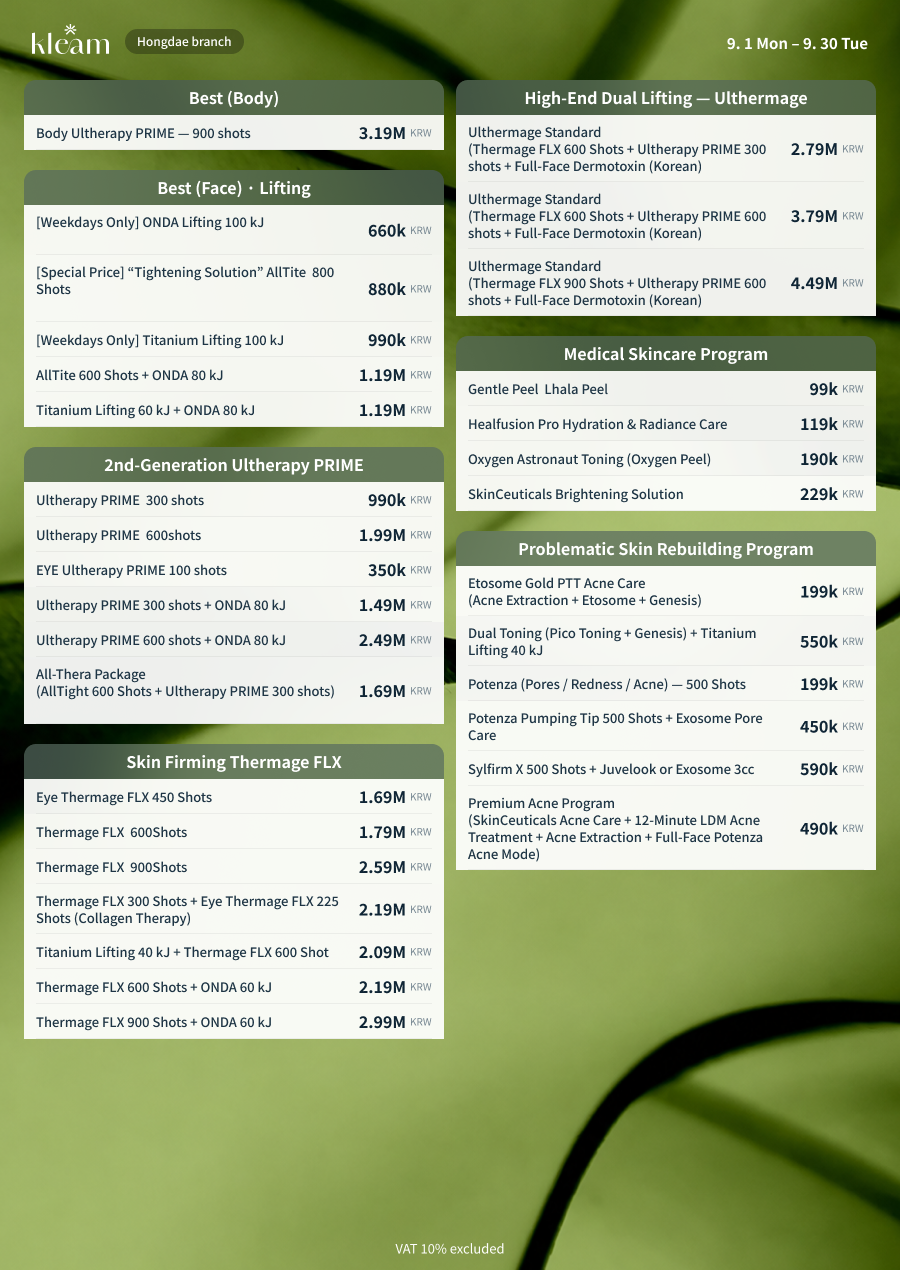
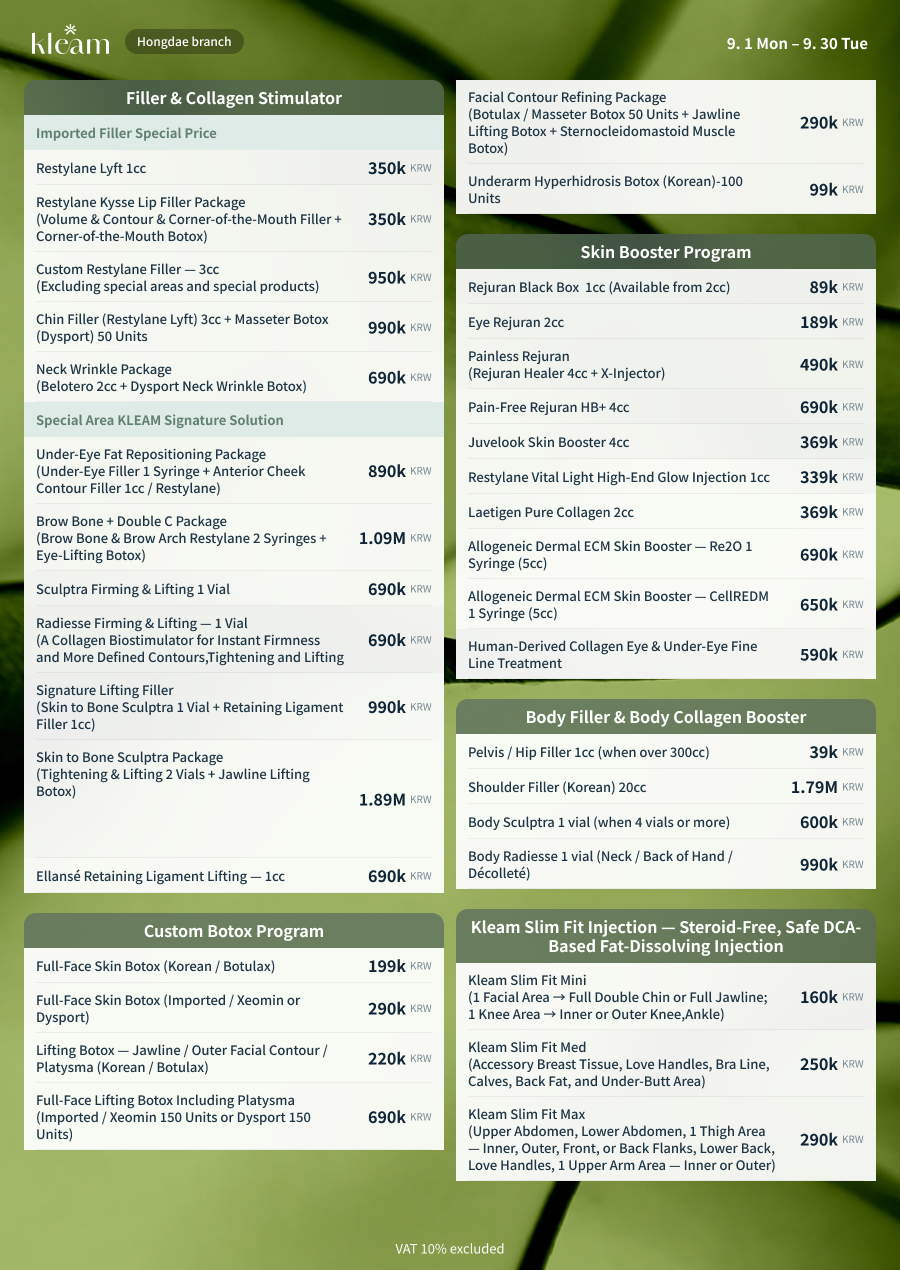
For details, see our pico laser cost guide and laser toning cost guide, and compare with the current price list.
Is pico laser better than laser toning for melasma?
Not automatically. Both can help, and the operator's settings and your consistency matter more than the device name. Pico toning may give smoother progress with less heat, which some doctors prefer for sensitive or reactive skin. Laser toning has a long track record and costs less per visit.
What matters most for melasma:
- Low, steady energy rather than aggressive sessions.
- Regular intervals, often every 1–2 weeks at first.
- Daily broad-spectrum SPF and avoiding heat triggers such as saunas.
- Maintenance sessions, because melasma has no permanent cure.
Avoid IPL or strong heat-based treatments unless your doctor recommends them, since they can worsen melasma in some people. Our Pico Laser vs IPL guide explains why.
How many sessions can you fit into a trip to Seoul?
Because both treatments have about 0–1 day of downtime, you can do a session on arrival day and another a week later if you are staying longer. Short-trip visitors usually get one or two toning sessions plus a pico spot treatment for stubborn marks, then continue maintenance at home.
Spot treatments may leave small dark crusts for about a week. They are easy to cover with makeup after a day or two, but keep this in mind before weddings or photo shoots. Expats living near Hongdae can follow the full recommended series more easily.
Planning your visit to a skin clinic in Hongdae, Seoul
Hongdae is easy to reach: Hongik Univ. Station is on Line 2, the Gyeongui–Jungang Line and the AREX Airport Railroad, which runs directly to Incheon and Gimpo airports. A few tips help toning sessions fit around your trip.
- Ask for English- or Japanese-speaking staff when you book.
- Many clinics take consultations by WhatsApp or KakaoTalk; send a clear daylight photo and your travel dates so sessions can be spaced sensibly.
- Confirm who performs the treatment, the device and number of shots, and whether 10% VAT is included.
- Check the current Hongdae clinic price list before you book.
- Leave a buffer before your flight in case small crusts form after spot treatment.
To prepare, read about laser toning in Seoul, pico laser and melasma treatment.
Frequently asked questions
Is pico laser stronger than laser toning?
Pico laser is not simply stronger; it is faster. Its picosecond pulses break pigment into finer particles with less heat, which often clears stubborn spots in fewer sessions. Laser toning uses nanosecond pulses at low energy for gradual brightening. The doctor chooses settings based on your pigment type and skin tone.
How many laser toning sessions do I need for dark spots?
Many people in Korea do about 5–10 laser toning sessions, roughly 1–2 weeks apart, for diffuse pigment or melasma, then occasional maintenance. Distinct dark spots may need pico spot treatment in addition. The doctor sets the number of sessions after examining your skin.
Does pico laser or laser toning hurt?
Most people find both very tolerable, describing light snapping or warm prickling. Toning usually needs no numbing cream. Spot treatment is a little sharper on individual marks. Cooling or a soothing mask afterward settles any mild redness within a few hours.
Can I combine pico laser with skin boosters?
Yes. In Seoul, toning is commonly paired with water-glow skin boosters, Rejuran or whitening injections to support hydration and skin quality. Some combinations can be done on the same day; the doctor decides the order and timing based on your skin and travel schedule.
What aftercare do I need after laser toning or pico laser?
Use a gentle cleanser and moisturizer, apply SPF 50 every day, and avoid saunas, hot baths, intense exercise and exfoliating acids for a few days. Do not pick any crusts after spot treatment. Results vary, and pigment can return with sun exposure.
Related guides
This guide is general information for international visitors, not medical advice. A doctor confirms suitability, dosage and number of sessions at consultation. Prices are approximate Seoul market ranges and change over time — always check the clinic's current price list. Last updated: October 2026.