Exosome Skin Treatment Cost in Korea
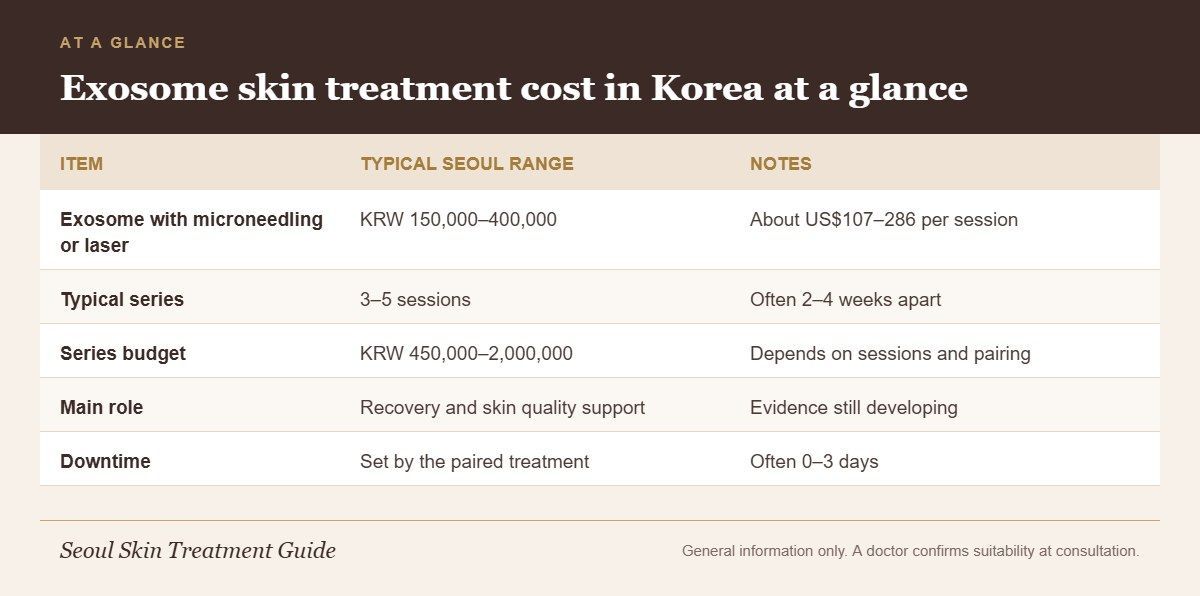
Quick answer: Exosome skin treatment cost in Korea is typically about KRW 150,000–400,000 (roughly US$107–286) per session in Seoul in 2026 when exosome is applied with microneedling or laser. The paired procedure largely sets the price. Exosome is used to support recovery and skin quality, but its evidence is still developing.
How much does exosome skin treatment cost in Korea?
Exosomes are tiny vesicles released by cells that carry proteins and other signaling molecules. Cosmetic exosome products are applied to the skin, usually right after microneedling or a fractional laser opens micro-channels, with the aim of supporting recovery, calming redness and improving overall skin quality.
In Seoul, exosome is rarely priced alone. The typical 2026 range is about KRW 150,000–400,000 per session including the delivery treatment. A quote near the lower end often means gentle microneedling with exosome; a quote near the upper end may involve a more intensive procedure or more product.
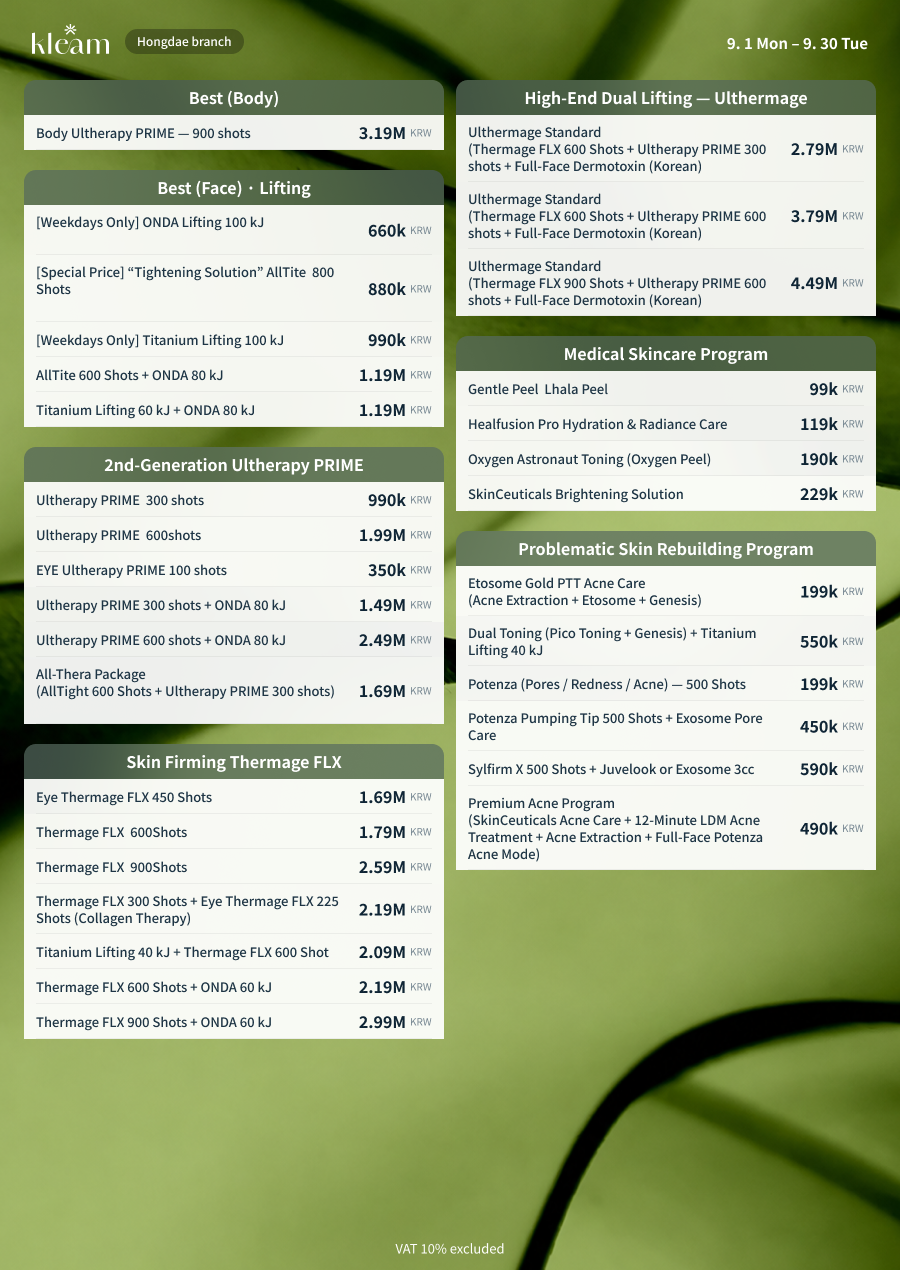
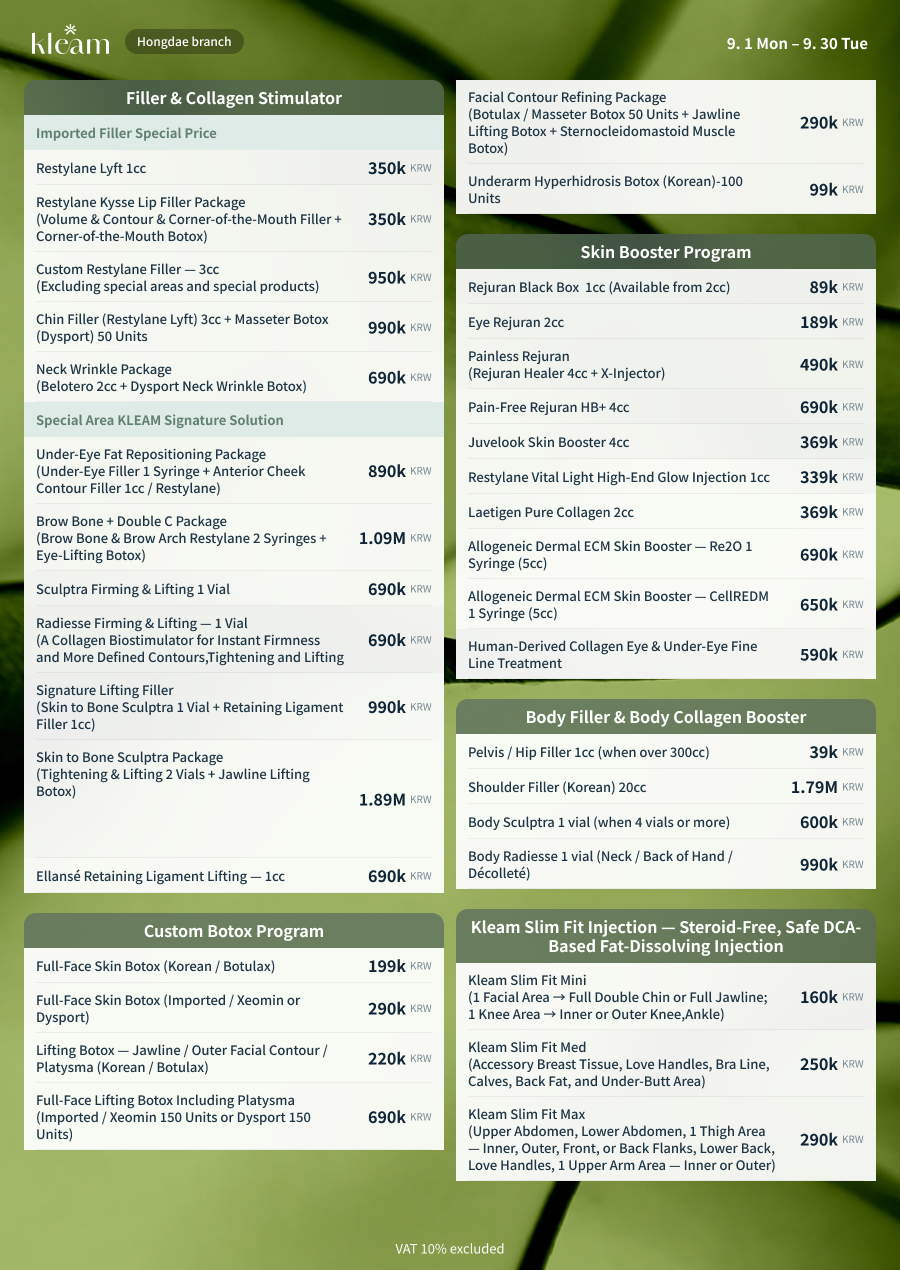
For current figures, check the current price list and any promotions.
Why does the paired treatment set the price?
Exosome needs a way to reach the skin effectively, so it is almost always combined with something else. That paired procedure decides most of your cost and downtime. The table shows typical Seoul ranges for common pairings. Some clinics bundle exosome into one price; others list it as an add-on to the separately priced procedure.
| Pairing | Typical Seoul range for the paired treatment (KRW) | Typical downtime |
|---|---|---|
| Exosome + microneedling or laser (bundled) | 150,000–400,000 | About 0–2 days of redness |
| Exosome after pico fractional | Pico fractional 100,000–300,000, plus exosome add-on | About 0–2 days |
| Exosome after Potenza | Potenza 200,000–500,000, plus exosome add-on | About 2–5 days |
| Exosome after Fraxel | Fraxel 150,000–400,000, plus exosome add-on | About 2–5 days |
| Exosome after CO2 fractional | CO2 100,000–300,000, plus exosome add-on | About 5–7 days |
When comparing quotes, ask exactly which procedure is included, how much exosome product is used and whether numbing, calming care and 10% VAT are in the total.
What is exosome treatment actually good for?
In Seoul clinics, exosome is most often chosen for these goals:
- Faster-feeling recovery after resurfacing such as Fraxel laser in Seoul or CO2 fractional laser.
- Skin quality and glow for dull, tired skin.
- Calming support when skin is sensitive or easily red.
- Texture and scars as part of a plan for acne scar treatment in Korea.
What the evidence says
Research on exosomes in skin care is active and early results are encouraging, but large, high-quality studies for cosmetic use are still limited. Products also differ in source and concentration. A responsible clinic will describe exosome as a supportive add-on and will not promise a specific result. Results vary from person to person.
How many exosome sessions do you need, and what is the total cost?
There is no single standard protocol. Many doctors suggest a series of about 3–5 sessions spaced 2–4 weeks apart when exosome is part of a texture or scar plan, or one session alongside a single resurfacing treatment when it is mainly for recovery.
- One session with a trip-friendly pairing: about KRW 150,000–400,000.
- Series of 3: about KRW 450,000–1,200,000.
- Series of 5: about KRW 750,000–2,000,000.
Packages often lower the per-session price. Ask whether a package can be used across separate trips to Korea.
Is exosome worth the cost compared with Rejuran or PRP?
Exosome is often the lowest-cost way to add a booster to a laser or microneedling session, which is why many travelers choose it. Whether it is worth it depends on your goal.
- Exosome vs Rejuran: Rejuran Healer is an injectable polynucleotide with a longer track record for repair and elasticity, typically KRW 200,000–450,000 per 2cc session. See Rejuran vs Exosome.
- Exosome vs PRP: PRP injections use your own blood-derived platelets, so preparation takes longer. Exosome is a ready-made product with no blood draw.
- Exosome vs Juvelook: Juvelook stimulates collagen with PDLLA and is better suited to longer-term firmness; see Juvelook vs Rejuran vs Exosome.
For a price view of all boosters together, see our skin booster cost guide.
How much downtime should you plan for in Seoul?
Exosome itself is gentle. Your downtime comes from the paired treatment:
- Exosome with light microneedling or laser: mild redness for about 0–2 days.
- With Potenza or Fraxel: about 2–5 days of redness and roughness.
- With CO2 fractional: about 5–7 days of redness and crusting.
Book stronger combinations early in your trip and leave a buffer before flights and events. Use sunscreen daily and avoid saunas and heavy exercise until the doctor says otherwise. Exosome treatments are generally postponed during pregnancy and breastfeeding.
Planning an exosome treatment at a skin clinic in Hongdae, Seoul
Hongdae is easy to reach: Hongik Univ. Station is on Line 2, the Gyeongui–Jungang Line and the AREX Airport Railroad, with direct trains to Incheon and Gimpo airports. Many clinics in the area have English- or Japanese-speaking staff, and many take consultation requests by WhatsApp or KakaoTalk, so send photos of your skin and your travel dates in advance.
Before you book, confirm who performs the treatment, which paired procedure is included, how much exosome product is used and whether VAT is in the quote. Compare it with the current Hongdae clinic price list, and read about exosome treatment in Seoul, microneedling in Seoul and skin rejuvenation. Leave a buffer of a few days before your flight.
Frequently asked questions
How much does one exosome session cost in Seoul?
One exosome session applied with microneedling or laser typically costs about KRW 150,000–400,000 in Seoul in 2026, roughly US$107–286. If exosome is added to a stronger treatment such as Potenza or Fraxel, you usually pay for that treatment plus an exosome add-on. Confirm whether VAT is included.
Is exosome treatment proven to work?
Exosome research is promising, and many people report calmer, faster-recovering skin, but robust clinical evidence for cosmetic exosome use is still developing. Products also vary. Think of exosome as a supportive add-on to a proven procedure such as microneedling or fractional laser, rather than a guaranteed result on its own.
Does exosome treatment hurt?
The exosome itself is applied topically and does not hurt. Any discomfort comes from the paired microneedling or laser. Clinics usually apply numbing cream for 20–40 minutes first. Light microneedling feels like prickling, while RF microneedling or ablative laser feels stronger, so ask the doctor which method they plan.
Can I fly after an exosome treatment?
Usually yes. With light microneedling or laser, you may have mild redness for 0–2 days and can generally fly the next day. With stronger pairings like Fraxel or CO2, redness can last 2–7 days, so leave more buffer. Keep skin moisturized during the flight and use sunscreen on arrival.
Is exosome the same as a skin booster injection?
Not exactly. Most cosmetic exosome treatments are applied to the skin through micro-channels made by microneedling or laser, while skin boosters such as Rejuran or Juvelook are injected. Both aim to improve skin quality, but they differ in ingredients, evidence base, price and downtime.
Related guides
This guide is general information for international visitors, not medical advice. A doctor confirms suitability, dosage and number of sessions at consultation. Prices are approximate Seoul market ranges and change over time — always check the clinic's current price list. Last updated: October 2026.