Korean Botox vs Imported Botox: Which Should You Choose?
Quick answer: Korean Botox (toxins such as Nabota or Botulax) is a good choice if you want reliable results at a lower price for common areas like the forehead, frown lines or jaw. Imported Botox (Allergan’s Botox) or Xeomin usually costs more and suits people who want a familiar international brand, need frequent high doses, or are concerned about developing resistance.
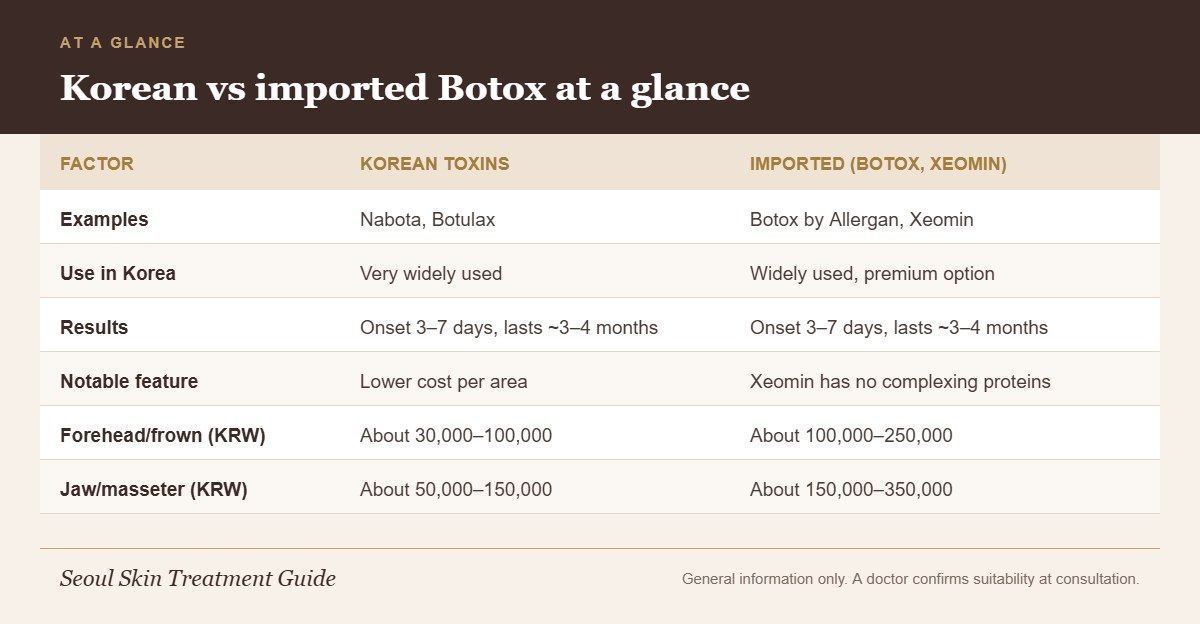
What is the difference between Korean Botox and imported Botox?
“Botox” is a brand name, but in Korea people use it for all botulinum toxin injections. Korean toxins are made by Korean manufacturers and include products such as Nabota and Botulax. Imported toxins in Korean clinics most commonly mean Botox by Allergan and Xeomin.
All of these products temporarily relax the muscles they are injected into. The main practical differences in the Korean Botox vs imported Botox choice are price, brand familiarity, the formulation, and how you might respond over many years of repeat treatments. Many Seoul clinics offer Botox in Hongdae as well as Xeomin; ask at consultation which toxin brands are currently available for your area.
| Factor | Korean toxins | Imported Botox | Xeomin |
|---|---|---|---|
| Maker | Korean manufacturers | Allergan | Imported brand |
| Complexing proteins | Varies by product | Contains them | None |
| Typical results | Onset 3–7 days, about 3–4 months | Onset 3–7 days, about 3–4 months | Onset 3–7 days, about 3–4 months |
| Relative cost in Seoul | Lowest | Higher | Higher |
| Often chosen by | First-timers, budget-conscious visitors, small areas | People who use Botox at home and want the same brand | Frequent or high-dose users concerned about resistance |
Do Korean toxins work as well as imported Botox?
For most people and most areas, Korean toxins give results that patients find comparable: a visible softening of lines within 3–7 days, full effect at about 2 weeks, and duration of roughly 3–4 months. That is why they are so widely used in Korea, including by many locals who get regular treatments.
Individual responses still vary. Some people feel one brand lasts a little longer or looks a little softer on them. If you have used a particular brand before with good results, tell the doctor; staying with what works for you is a reasonable choice.
What about Botox resistance?
Resistance means your body stops responding as well to toxin, usually because it has made antibodies. It is uncommon, but the risk is thought to be higher with very frequent treatments, high doses and large muscles.
Xeomin in Seoul is often discussed in this context because it contains no complexing proteins, only the active toxin. Some doctors prefer it for people who already have frequent jaw, shoulder or body treatments, or who feel their usual toxin is wearing off faster. If resistance concerns you, share your full toxin history at consultation.
Which should you choose for each area?
Forehead, frown lines and crow’s feet
These areas use relatively small doses, so many visitors choose Korean toxin for value. Imported toxin is a good option if you want brand consistency with treatments at home. See our wrinkle treatment guide for Seoul for other options.
Jaw (masseter) slimming
Jaw Botox uses larger doses and is often repeated to slim the muscle over time, so price differences add up. Many people start with Korean toxin; frequent, long-term users sometimes switch to Xeomin. For V-line goals, compare jaw Botox vs chin filler.
Shoulders (trapezius) and body
Body areas need the highest doses. Discuss resistance and budget carefully; this is where Xeomin is often considered. Body toxin is part of broader body contouring in Korea.
Skin Botox (micro-Botox)
Diluted, superficial toxin for pores and oil. Ask about skin Botox (micro-Botox) at consultation, and read Botox vs skin Botox to understand the difference.
How much does Korean vs imported Botox cost in Seoul?
The price gap is the main reason this question comes up. Approximate Seoul market ranges in 2026:
| Area | Korean toxin | Imported (Botox or Xeomin) |
|---|---|---|
| Forehead or frown | KRW 30,000–100,000 (about US$20–70) | KRW 100,000–250,000 (about US$70–180) |
| Jaw (masseter) | KRW 50,000–150,000 (about US$40–110) | KRW 150,000–350,000 (about US$110–250) |
| Skin Botox, full face | Overall range KRW 100,000–300,000 (about US$70–210) | Usually toward the upper end of that range |
Other price drivers include the number of units, how many areas you combine, whether a follow-up touch-up is included, and the 10% VAT usually added to cosmetic procedures. Very low prices can reflect fewer units, so ask what dose is included. These are market ranges, not any single clinic’s prices; see the current price list, plus our Botox cost guide for Korea and jaw Botox cost guide.
How to choose: a quick checklist
- First time, small area, budget matters: Korean toxin is a sensible start.
- You already use Allergan’s Botox at home and like it: imported Botox keeps things consistent.
- Frequent jaw, shoulder or body treatments: ask the doctor about Xeomin.
- Your usual toxin seems to wear off quickly: share your history and ask about switching.
- Unsure: let the doctor recommend a brand based on the area, dose and your goals.
Whatever you choose, ask which product and how many units are being used. A reputable clinic will tell you.
Planning your visit to a skin clinic in Hongdae, Seoul
A quick Botox appointment fits easily into a short trip. Hongik Univ. Station is on Seoul Subway Line 2, the Gyeongui–Jungang Line and the AREX Airport Railroad, with direct trains to Incheon and Gimpo airports.
- Ask whether English- or Japanese-speaking staff are available.
- Many clinics take consultations by WhatsApp or KakaoTalk; send photos, your toxin history and your travel dates.
- Confirm who performs the treatment, the toxin brand, the exact units, and whether VAT is included.
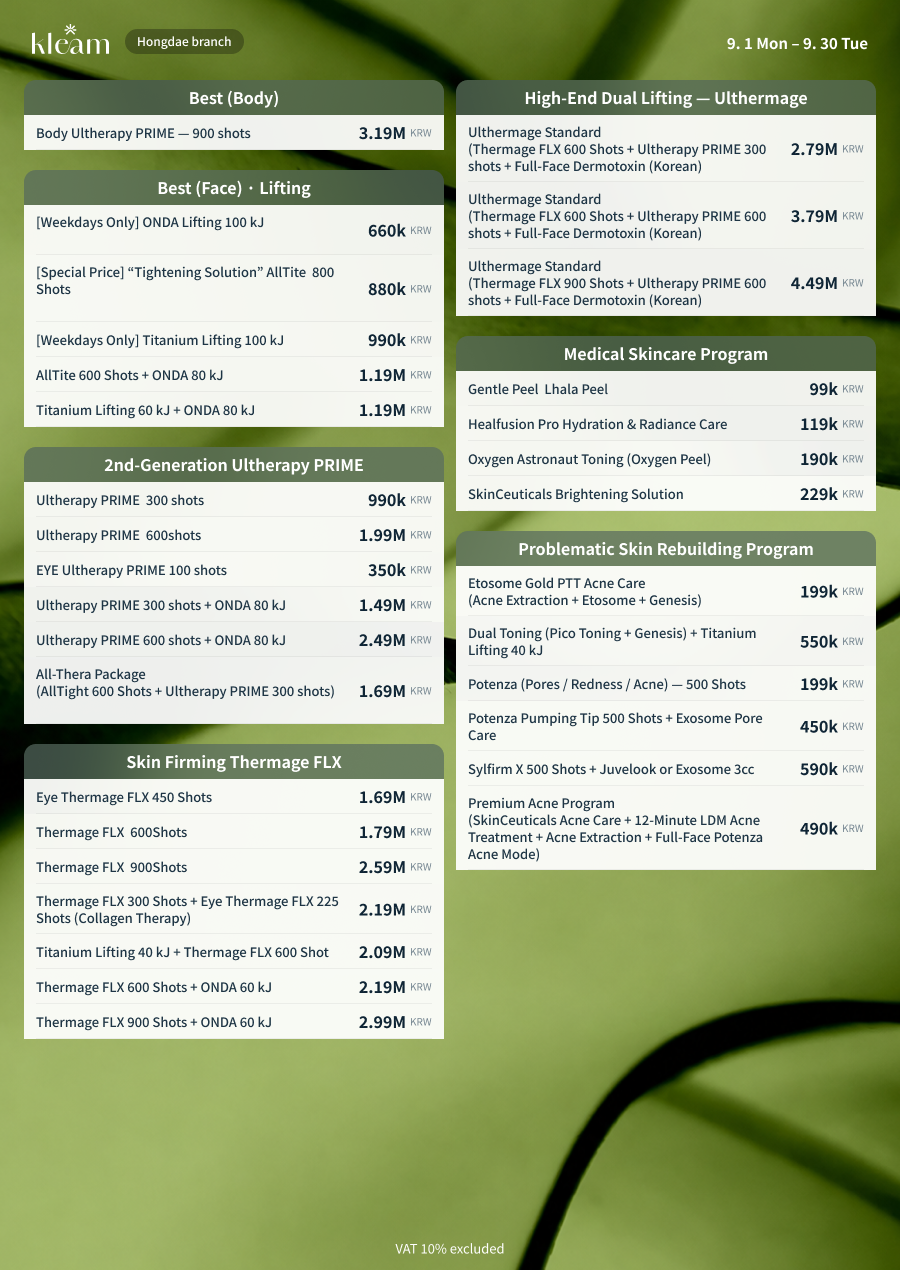
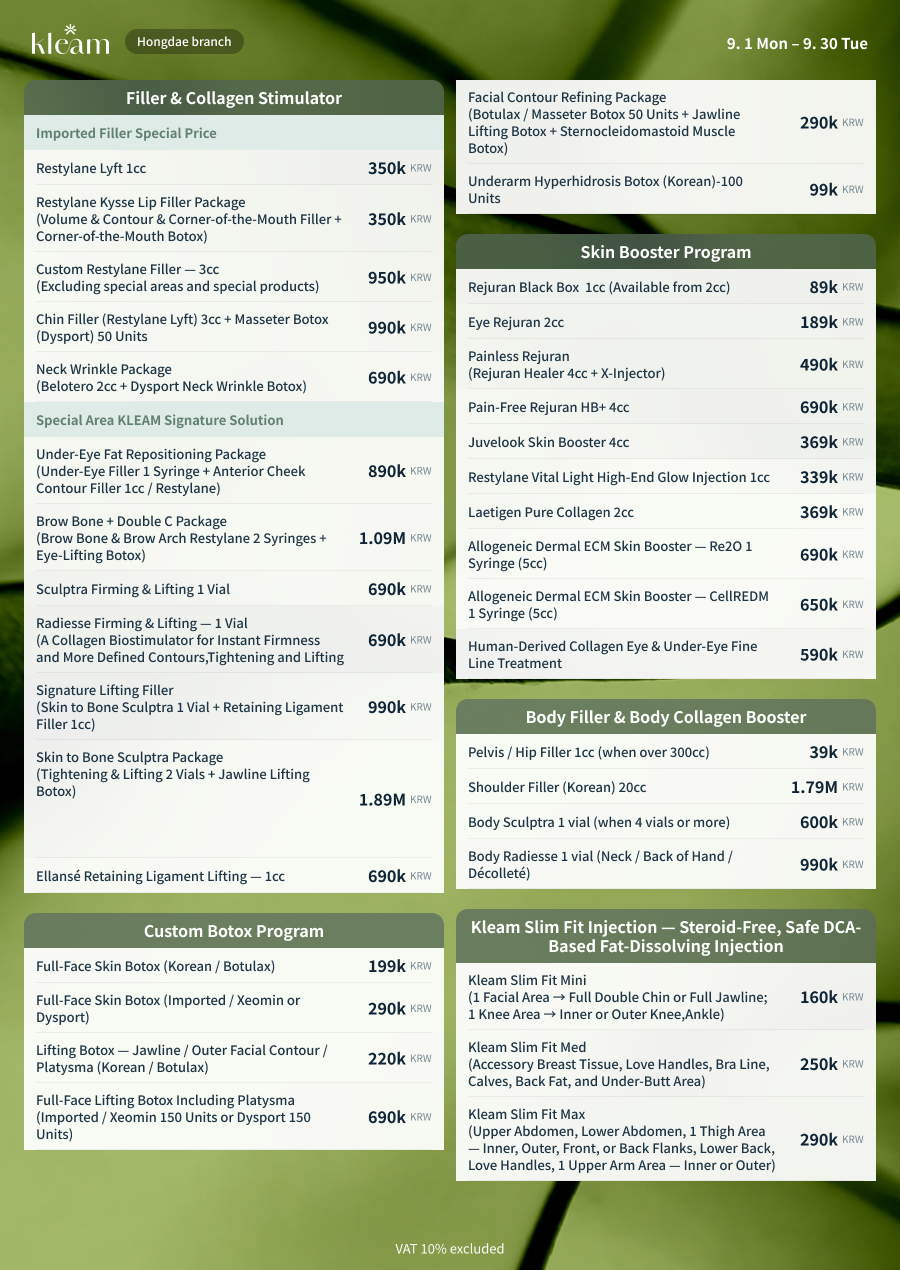
- Check the clinic’s current Hongdae clinic price list before you book.
- Leave a buffer before your flight.
If you want glow or smoother texture as well, see skin boosters in Seoul, enlarged pore treatments or broader anti-aging treatments.
Frequently asked questions
Is Korean Botox safe?
Korean botulinum toxins are approved in Korea and widely used by Korean dermatologists and their patients. As with any toxin, safety depends on correct dosing and technique by a doctor. Tell the doctor about pregnancy, breastfeeding, neuromuscular conditions and medications before treatment. Mild bruising or a heavy feeling for a few days can occur.
Does imported Botox last longer than Korean Botox?
For most people, duration is similar, about 3–4 months for wrinkles and often longer for the jaw. Individual responses differ, so some people feel one brand lasts slightly longer on them. Dose matters more than many people realize: a lower-priced treatment with fewer units may wear off sooner.
What is the difference between Botox and Xeomin?
Both are imported botulinum toxins with similar onset and duration. Xeomin contains no complexing proteins, only the active toxin, which some doctors prefer for people who have frequent or high-dose treatments and want to reduce the theoretical risk of resistance. In Seoul, both usually fall within the imported price range.
Can I switch between Korean and imported Botox?
Yes, switching brands is common. Tell the doctor which brand and dose you used last time and how long it lasted, so they can adjust. If you switch because results seem weaker, the doctor may also check dose, timing and technique before assuming resistance.
Can I fly after Botox in Seoul?
Usually yes, even the next day. Avoid rubbing the area, saunas and intense exercise for 24–48 hours, and stay upright for a few hours after treatment. Because full results take about 2 weeks, book early in your trip if you want to see the final effect before leaving Korea.
Related guides
This guide is general information for international visitors, not medical advice. A doctor confirms suitability, dosage and number of sessions at consultation. Prices are approximate Seoul market ranges and change over time — always check the clinic's current price list. Last updated: October 2026.