Botox vs Skin Botox: What’s the Difference?
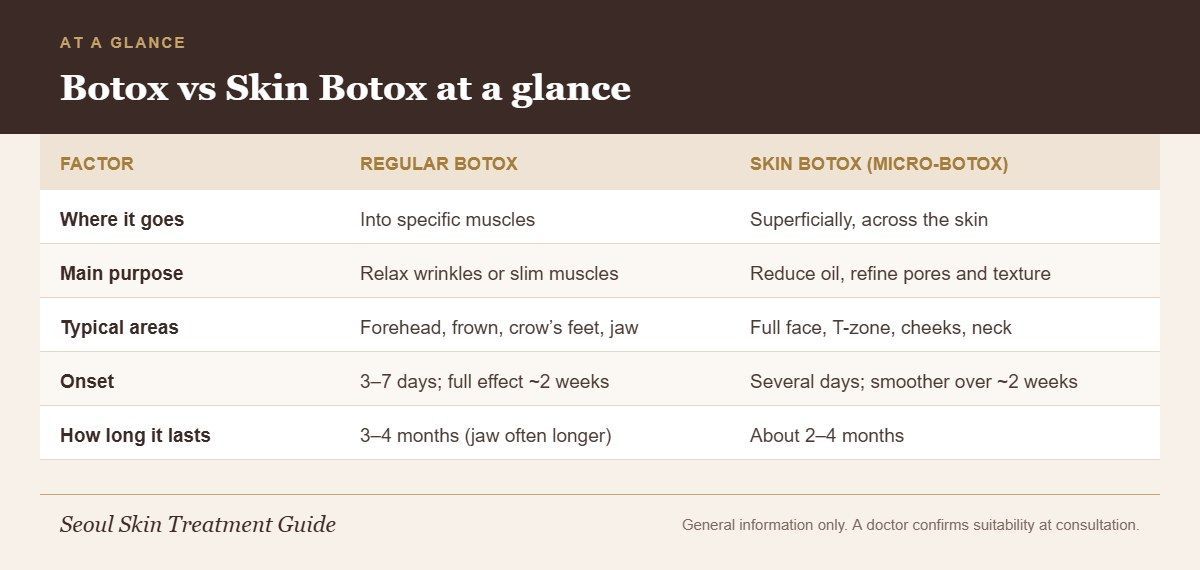
Quick answer: Regular Botox is injected into specific muscles to relax expression wrinkles such as frown lines and crow’s feet, or to slim the jaw. Skin Botox (micro-Botox) uses diluted toxin placed superficially across the face to reduce oil, refine the look of pores and smooth fine texture. Same family of product, different depth, dose and goal.
What is the difference between Botox and skin Botox?
Botox is a botulinum toxin injection that temporarily relaxes the muscle it is placed in. In dermatology it is used to soften dynamic wrinkles, the lines that appear when you frown, raise your eyebrows or smile, and to reduce bulky muscles such as the masseter in the jaw.
Skin Botox, also called micro-Botox, uses the same type of toxin but diluted and spread in many tiny, shallow injections. Instead of stopping muscle movement, it acts mainly on the surface: oil glands, sweat glands and the tiny muscle fibers attached to the skin. The result is less shine, smaller-looking pores and finer texture.
So in the Botox vs skin Botox question, the product family can be the same, but depth, dose and purpose are different . Ask about skin Botox (micro-Botox) at consultation; regular Botox in Hongdae is widely offered.
| Factor | Regular Botox | Skin Botox |
|---|---|---|
| Injection depth | Into the target muscle | Very superficial, into the skin |
| Injection pattern | A few precise points per area | Many tiny droplets across a wide area |
| Best for | Frown lines, forehead lines, crow’s feet, square jaw, trapezius | Oily skin, visible pores, fine crepey texture, mild redness from flushing |
| Effect on expressions | Reduces movement in treated muscles | Expressions usually stay natural |
| Duration | About 3–4 months; jaw often longer | About 2–4 months |
| Typical Seoul range (2026) | Forehead or frown: KRW 30,000–100,000 Korean toxin; KRW 100,000–250,000 imported | Full face: KRW 100,000–300,000 |
Which do you need: Botox or skin Botox?
A quick way to decide is to look in the mirror twice: once with your face relaxed, once while making expressions.
Lines that appear when you move: regular Botox
- Forehead lines when you raise your eyebrows.
- The “11” lines between the brows when you frown.
- Crow’s feet when you smile.
- A square jaw from strong chewing muscles, or tight, bulky shoulders.
These are classic dynamic wrinkles and muscle concerns. See our page on wrinkle treatments in Seoul for related options.
Surface issues you see all the time: skin Botox
- Shiny T-zone by midday.
- Enlarged pores on the cheeks or nose.
- Fine, crepey texture that makeup settles into.
- A desire for a smoother, glass-skin finish.
If you have lines at rest, such as deep folds, neither toxin may be enough; filler or skin boosters might be needed. Our guide to Botox vs filler covers that decision.
How long do Botox and skin Botox results last?
Regular Botox usually starts to work in 3–7 days, reaches full effect at about 2 weeks and lasts around 3–4 months. Jaw (masseter) Botox often lasts longer, and repeated treatments can gradually slim the muscle.
Skin Botox also begins working within several days, with less oil and smoother texture over about 2 weeks. The effect typically lasts about 2–4 months, so people who like it often repeat it a few times a year, for example before summer when oil is worse.
How much do Botox and skin Botox cost in Seoul?
Approximate Seoul market ranges in 2026:
- Forehead or frown Botox, Korean toxin: about KRW 30,000–100,000 (roughly US$20–70).
- Forehead or frown Botox, imported (Botox or Xeomin): about KRW 100,000–250,000 (roughly US$70–180).
- Jaw (masseter) Botox: about KRW 50,000–150,000 Korean, or KRW 150,000–350,000 imported (roughly US$40–110 or US$110–250).
- Skin Botox, full face: about KRW 100,000–300,000 (roughly US$70–210).
The biggest price driver is the toxin brand: Korean toxins usually cost less than imported ones such as Allergan’s Botox or Xeomin. Units, number of areas, and the 10% VAT usually added to cosmetic procedures also matter. These are market ranges, not any single clinic’s prices; check the current price list. For more detail, see our Botox cost guide for Korea and skin Botox cost guide.
Can you get Botox and skin Botox together?
Yes. Combining them is common in Korea: regular Botox for frown lines or the jaw, and skin Botox for pores and oil on the cheeks and T-zone. A doctor plans the total dose and avoids overlapping areas so expressions stay natural.
Skin Botox also pairs well with hydrating skin boosters for glow. If you are choosing between a booster and micro-Botox for glass skin, read Rejuran vs Skin Botox. Toxin is also used for excessive sweating; see hyperhidrosis treatment in Korea.
Is there downtime, and can you fly afterward?
Downtime is minimal for both. You may see small bumps or pinpoint redness for a few hours, and occasional small bruises. Typical aftercare includes:
- Do not rub or massage the treated area for the rest of the day.
- Avoid saunas, hot baths and intense exercise for 24–48 hours.
- Stay upright for a few hours after treatment.
- Flying the next day is usually fine.
Because Botox takes up to 2 weeks to reach full effect, book it early in your trip if you want to see the result before you leave, or plan a check at home.
Planning your visit to a skin clinic in Hongdae, Seoul
Toxin treatments are quick, so they combine well with sightseeing in Hongdae. Hongik Univ. Station is on Seoul Subway Line 2, the Gyeongui–Jungang Line and the AREX Airport Railroad, with direct trains to Incheon and Gimpo airports.
- Ask whether English- or Japanese-speaking staff are available.
- Many clinics take consultations by WhatsApp or KakaoTalk; send photos, your previous toxin brands and doses, and your travel dates.
- Confirm who performs the treatment, the toxin brand, the exact units, and whether VAT is included.
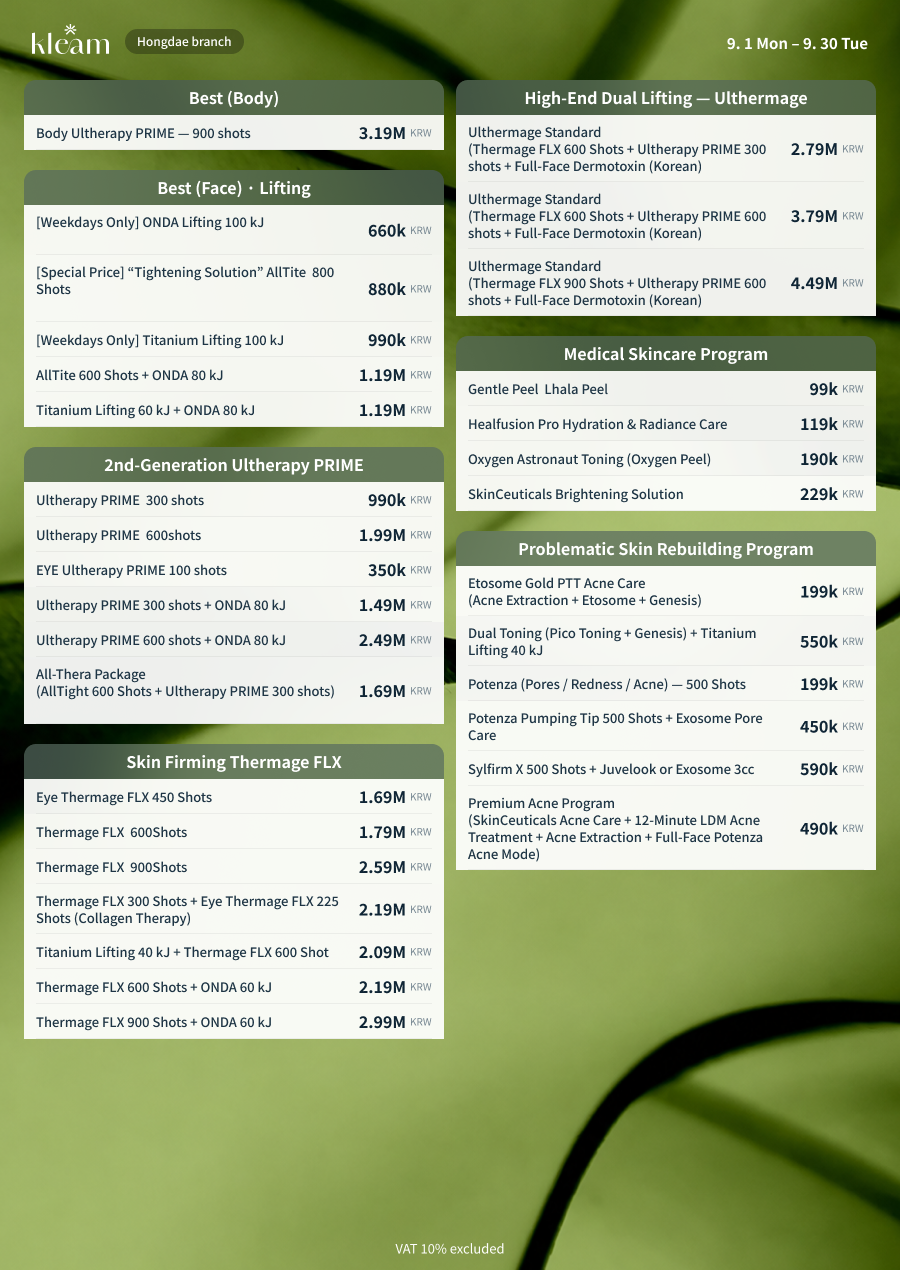
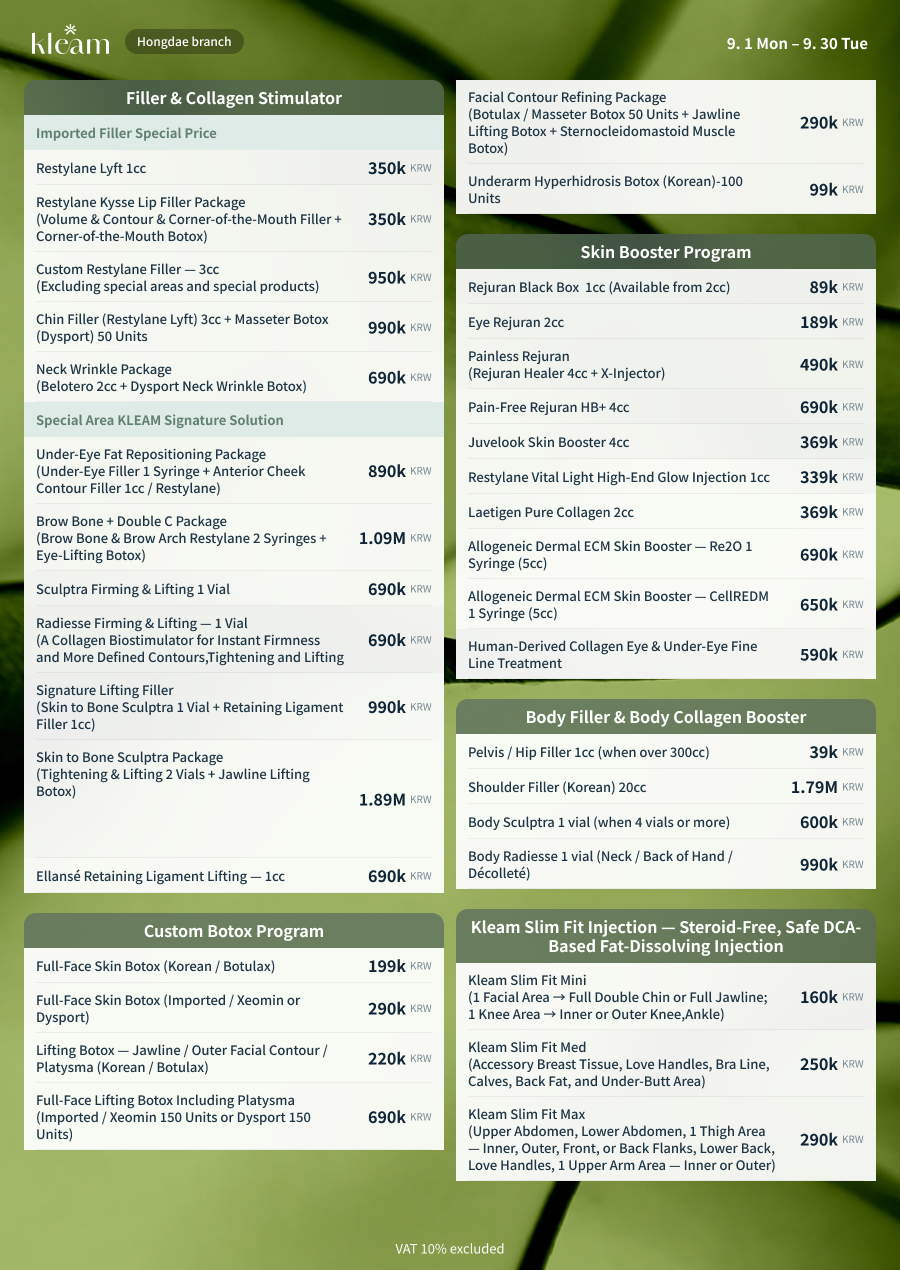
- Check the clinic’s current Hongdae clinic price list before you book.
- Book early in your trip, since Botox takes up to 2 weeks to reach full effect.
Read about Botox in Seoul, skin boosters in Hongdae and pore treatments in Korea before your consultation.
Frequently asked questions
Is skin Botox the same as Botox?
They use the same type of ingredient, botulinum toxin, but differently. Regular Botox goes into muscles to relax wrinkles or slim the jaw. Skin Botox is diluted and injected superficially in many small points to reduce oil and refine pores and texture. The dose, depth and goal are different.
Will skin Botox get rid of my wrinkles?
Skin Botox can soften very fine, crepey lines and improve texture, but it is not designed to stop deep expression lines like frown lines or crow’s feet. Those usually respond better to regular Botox in the muscle. Many people combine the two for smoother skin and softer expression lines.
Does Botox or skin Botox hurt?
Regular Botox involves a few quick injections and feels like brief pinches. Skin Botox involves many tiny injections, so numbing cream is often applied first. Most foreigners describe both as mildly uncomfortable rather than painful, and the treatment itself usually takes only minutes.
How often should I repeat Botox or skin Botox?
Regular Botox is typically repeated every 3–4 months, while jaw Botox may last longer. Skin Botox is usually repeated every 2–4 months if you want to keep the effect. A doctor may recommend spacing treatments appropriately to reduce the risk of developing resistance to the toxin.
Can I get Botox in Seoul with English support?
Yes. Many Hongdae clinics have English- and Japanese-speaking staff and offer consultations by WhatsApp or KakaoTalk. Share the areas you want treated, any previous toxin brands and doses, and your travel dates so the clinic can suggest a plan before you arrive in Korea.
Related guides
This guide is general information for international visitors, not medical advice. A doctor confirms suitability, dosage and number of sessions at consultation. Prices are approximate Seoul market ranges and change over time — always check the clinic's current price list. Last updated: October 2026.