Potenza vs Microneedling: What’s the Difference?
Quick answer: Potenza is radiofrequency microneedling: fine needles deliver RF heat into the dermis, so it works deeper and is better for acne scars, enlarged pores and mild laxity, with 2–5 days of redness. Classic microneedling uses needles alone, costs less and suits glow, mild texture and delivering serums such as exosome or PRP, with about 1–3 days of redness.
What is the difference between Potenza and microneedling?
Microneedling is a treatment in which many fine needles create controlled micro-channels in the skin. The skin responds with a wound-healing reaction that stimulates collagen, and the channels also help topical serums penetrate. See microneedling in Seoul.
Potenza is a Korean RF microneedling device. It adds radiofrequency energy released at or along the needle tips, heating the dermis at a chosen depth. That extra heat tightens tissue and drives stronger collagen remodeling than needles alone.
The simplest way to think about Potenza vs microneedling: classic needling is a skin-quality treatment, while Potenza is a structural treatment for scars, pores and firmness.
Who should choose Potenza?
- Acne scars: especially rolling and boxcar scars, often combined with subcision. Learn more on acne scar removal.
- Enlarged pores and oily skin: RF heat around the pores can tighten them and, in some people, reduce oiliness. See enlarged pore treatment.
- Early laxity and crepey texture: mild tightening on the lower face and neck.
- Medium to darker skin tones: RF microneedling bypasses much of the surface, which many doctors consider lower risk for pigmentation than heat-heavy lasers.
Who should choose classic microneedling?
- Dull or tired skin: to boost radiance before an event or as part of a glass-skin routine.
- Mild texture and very shallow marks: where RF is more than you need.
- Product delivery: classic needling is the usual partner for exosome treatment, PRP, PDRN and skin boosters.
- Body skin: some clinics use microneedling as part of stretch mark treatment.
- Smaller budgets or shorter trips: less downtime and lower cost per session.
Note that evidence for exosome is still developing; it is used mainly to support recovery and skin quality rather than as a stand-alone cure.
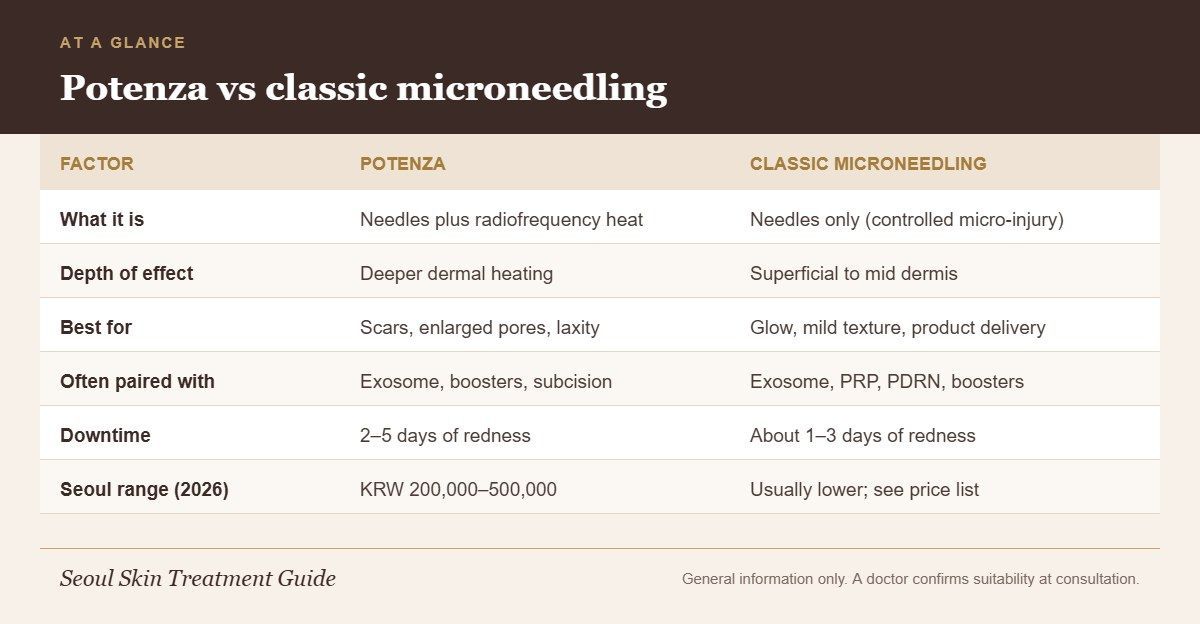
Potenza vs microneedling: side-by-side
| Factor | Potenza | Classic microneedling |
|---|---|---|
| Energy | Mechanical needling plus RF heat | Mechanical needling only |
| Collagen stimulation | Stronger | Milder |
| Acne scars | Good for moderate scars | Mild improvement only |
| Glow and hydration | Indirect | Good, especially with boosters |
| Downtime | 2–5 days | About 1–3 days |
| Typical course | Often 3–5 sessions, about 4 weeks apart | Often 3–5 sessions, 2–4 weeks apart |
| Typical Seoul cost (2026) | KRW 200,000–500,000 (about US$143–357) | Usually less than Potenza; with exosome about KRW 150,000–400,000 (about US$107–286) |
How much do Potenza and microneedling cost in Seoul?
In Seoul in 2026, Potenza typically costs about KRW 200,000–500,000 per session. Classic microneedling on its own is usually less expensive, while microneedling combined with exosome generally runs about KRW 150,000–400,000. A combination acne scar session can reach about KRW 150,000–500,000.
Price drivers include:
- Genuine single-use tips or cartridges, and needle depth.
- What is applied with the needling: exosome, PRP, PDRN or boosters.
- Treatment area and number of sessions in the course.
- 10% VAT, usually added to cosmetic procedures.
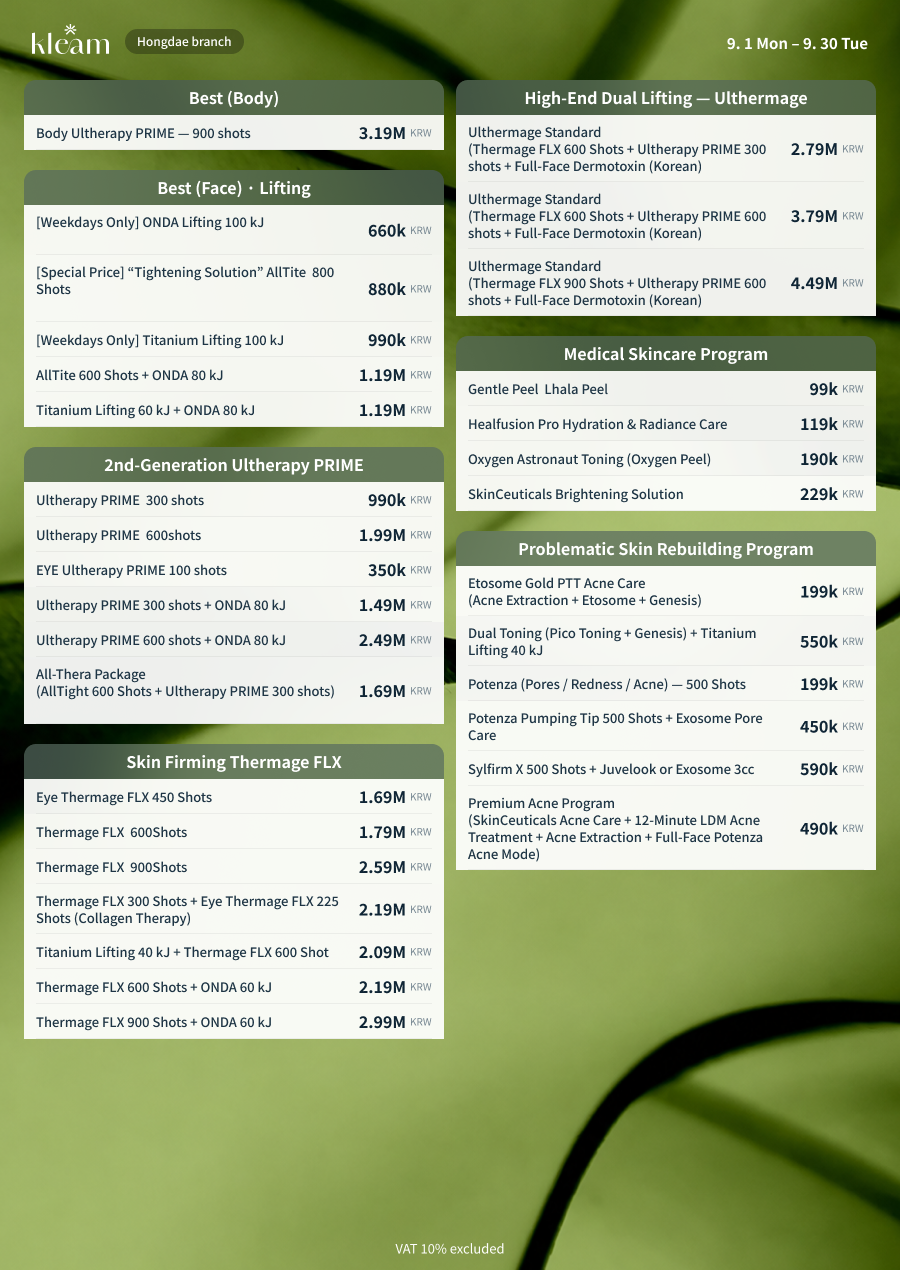
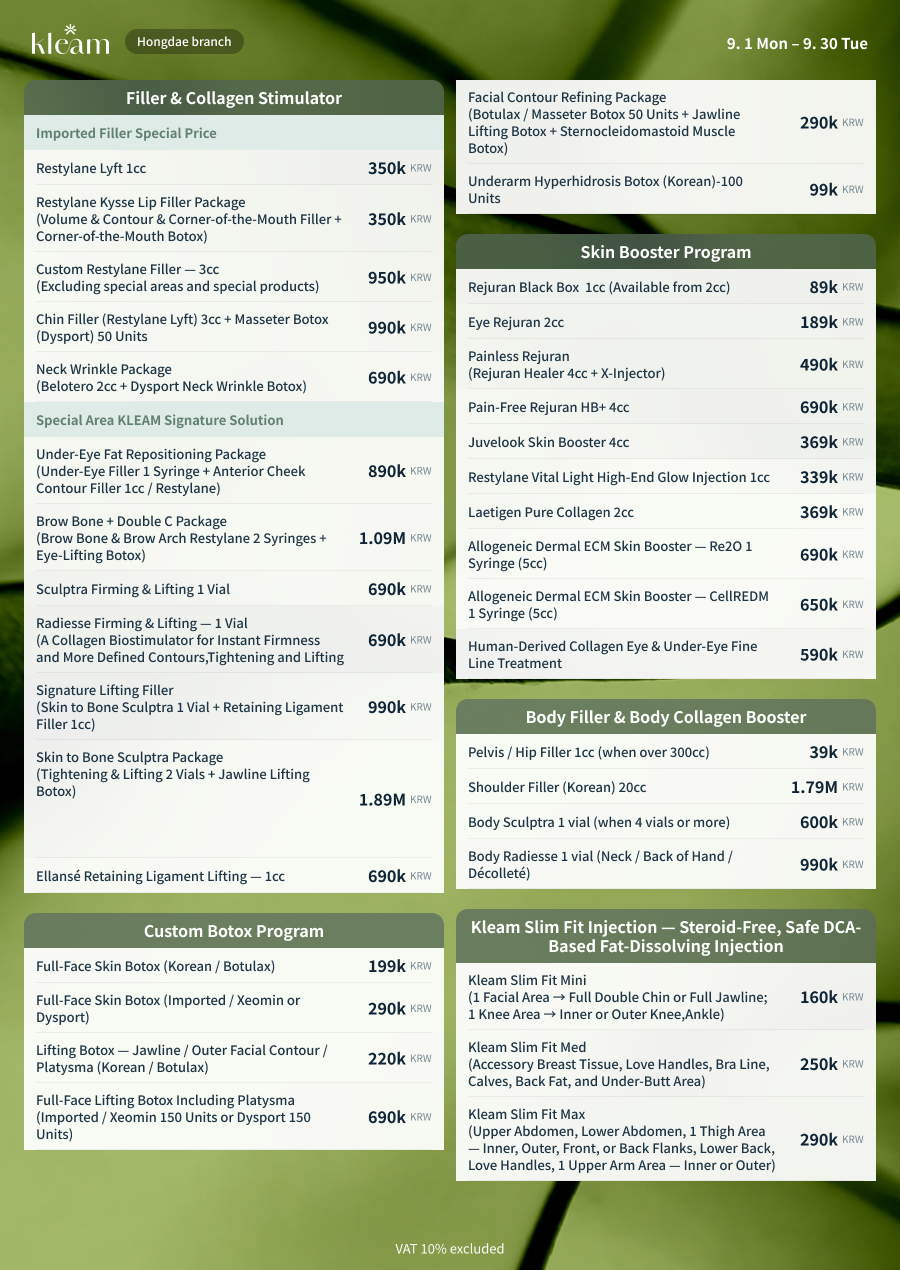
For more detail, see the Potenza cost guide and exosome treatment cost guide, and compare with the current price list.
What does a session feel like, and what happens afterward?
Potenza
Numbing cream is applied for about 30–40 minutes. During treatment you feel pressure and short hot pricks. Afterward, expect redness and pinpoint marks for about 2–5 days, sometimes with mild swelling. Makeup is usually possible after a day or two once the doctor approves.
Classic microneedling
Also done after numbing, it feels like light scratching or vibration. Skin looks flushed, similar to a mild sunburn, for about 1–3 days. If exosome or a booster is applied, the skin often feels calmer and more hydrated.
Aftercare for both
- Gentle cleanser and plain moisturizer for the first few days.
- No retinoids, acids or scrubs until the doctor says it is safe.
- Avoid saunas, swimming pools and heavy sweating for about 48 hours.
- SPF 50 every day, and reapply when you are out sightseeing.
Which is better on a short trip to Seoul?
If you have only a few days, classic microneedling with a booster is easier to fit in and gives a quick improvement in glow. Potenza needs more recovery time, so book it at the start of a trip of about a week or more.
For acne scars, one Potenza session is a beginning rather than a finish. Visitors often start in Seoul and continue the series at home. If you are deciding between RF microneedling and lasers, read Potenza vs Fraxel.
Planning your visit to a skin clinic in Hongdae, Seoul
Hongdae is easy to reach: Hongik Univ. Station is on Line 2, the Gyeongui–Jungang Line and the AREX Airport Railroad, which runs directly to Incheon and Gimpo airports. A few tips help needling treatments fit your trip.
- Ask for English- or Japanese-speaking staff when you book.
- Many clinics take consultations by WhatsApp or KakaoTalk; send photos of your skin concern and your travel dates.
- Confirm who performs the treatment, the tip or cartridge used, any add-on such as exosome, and whether 10% VAT is included.
- Check the current Hongdae clinic price list before you decide.
- Leave a buffer before your flight for redness.
To prepare, read about microneedling in Seoul, acne scar removal and enlarged pore treatment.
Frequently asked questions
Is Potenza better than regular microneedling?
For acne scars, pores and firmness, Potenza is usually more effective because it adds radiofrequency heat to the needling. For glow, hydration and delivering exosome or PRP, regular microneedling is often enough and costs less. Better depends on your goal, skin type and downtime limits.
How many microneedling or Potenza sessions do I need?
Most plans involve a series of about 3–5 sessions. Potenza is usually spaced around 4 weeks apart; classic microneedling with boosters may be repeated every 2–4 weeks. Collagen builds over months, so results continue after the series. The doctor decides the final number.
Does Potenza hurt?
With numbing cream, most people describe Potenza as uncomfortable rather than painful: pressure plus brief hot pricks, stronger over bony areas. Classic microneedling is usually milder. Tell the doctor if it feels too intense; settings can often be adjusted during treatment.
Can I combine microneedling with exosome or PRP?
Yes. In Korea, microneedling is commonly paired with exosome, PRP, PDRN or skin boosters to support healing and skin quality. Evidence for exosome is still developing, so treat it as a supportive add-on. The doctor recommends the best combination for your skin.
Can I fly after Potenza or microneedling?
Usually yes. Classic microneedling causes about 1–3 days of redness, and Potenza about 2–5 days. Flying is generally fine, but cabin air dries the skin, so moisturize often. Avoid makeup on the first day and use sunscreen once you land.
Related guides
This guide is general information for international visitors, not medical advice. A doctor confirms suitability, dosage and number of sessions at consultation. Prices are approximate Seoul market ranges and change over time — always check the clinic's current price list. Last updated: October 2026.