What to Expect at a Korean Skin Clinic: Step-by-Step Guide
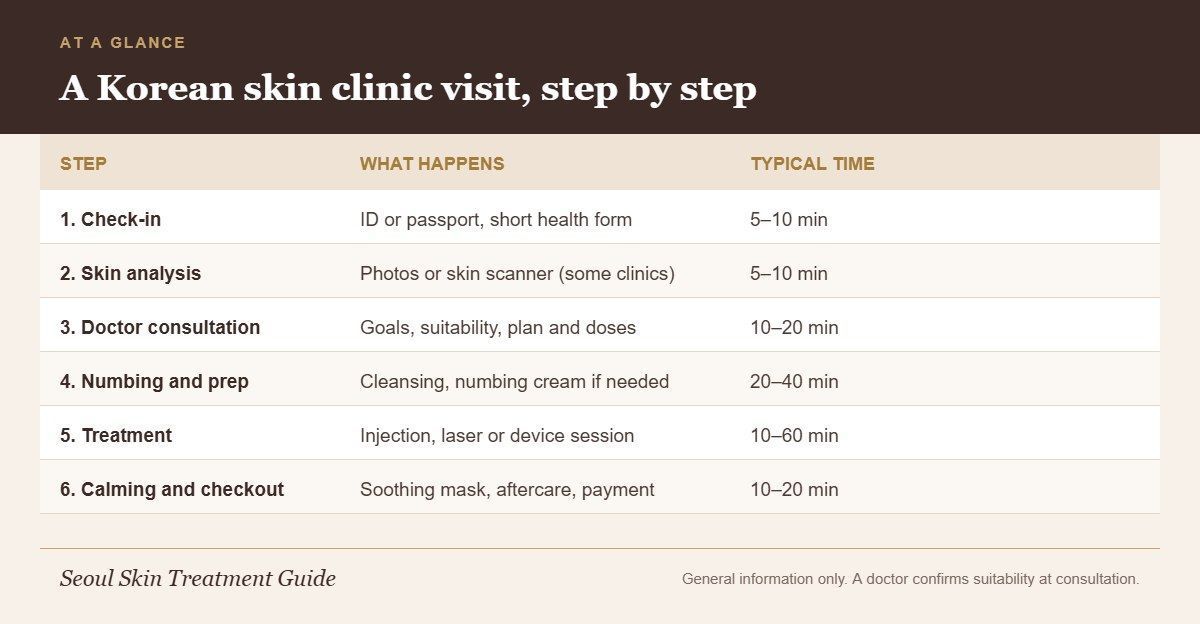
Quick answer: At a Korean skin clinic, you typically check in with your passport, fill out a short health form, get a skin assessment, meet a doctor who confirms your treatment plan, receive numbing cream if needed, have the procedure, then get a calming mask, aftercare instructions and pay. Most single-treatment visits take 1–2 hours in total.
What happens at a Korean skin clinic, step by step?
If this is your first visit to a dermatology or aesthetic clinic in Seoul, knowing what to expect at a Korean skin clinic removes most of the stress. Clinics in Korea are efficient and process-driven, so the same core steps repeat almost everywhere, whether you are in Hongdae, Gangnam or Myeongdong.
- Booking and pre-consultation. Many foreigners message the clinic first by WhatsApp or KakaoTalk with photos and goals. You get a rough plan and time slot.
- Check-in. Bring your passport. Reception registers you and gives you a health questionnaire covering allergies, medications, pregnancy and past procedures.
- Skin assessment. Some clinics take standardized photos or use a skin analyzer to look at pigment, redness and pores.
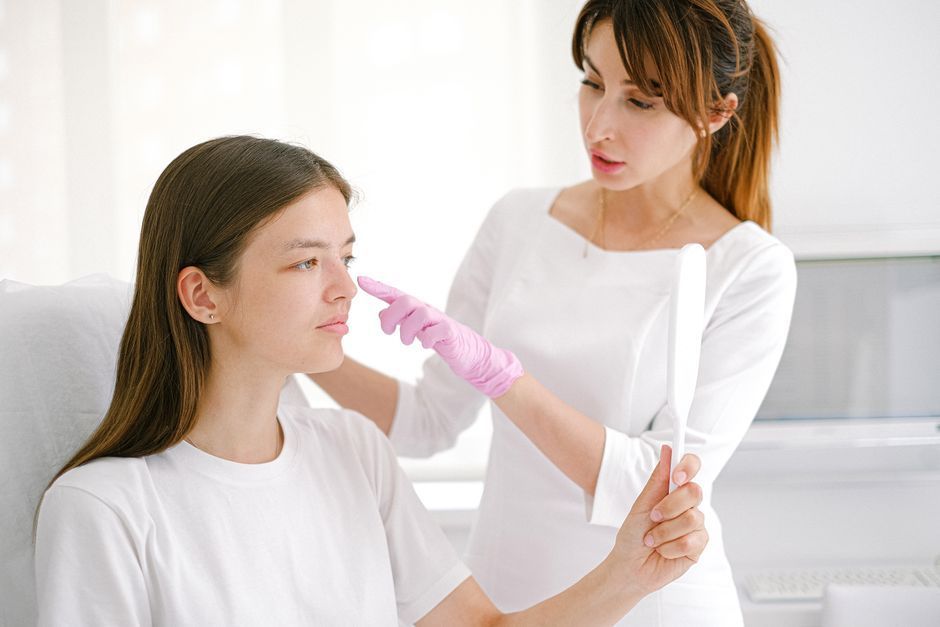
- Doctor consultation. The doctor examines your skin, explains options and confirms what is suitable for you.
- Counselor and pricing. A coordinator walks you through the price list, packages and timing.
- Preparation. Makeup removal, cleansing and numbing cream for injections, lasers or lifting devices.
- Treatment. Performed in a treatment room, from a few minutes for Botox to an hour for full-face lifting.
- Calming care and checkout. A soothing mask or cooling, written or verbal aftercare, then payment.
For the booking stage in more detail, see our guide on How to Book a Skin Clinic in Seoul as a Foreigner.
What should you bring to your first appointment?
A little preparation makes check-in quick and helps the doctor give safer advice.
- Passport for registration as a foreign patient.
- A list of medications and supplements , especially blood thinners, isotretinoin, antibiotics or anything that makes skin photosensitive.
- Your treatment history : dates and products of previous fillers, Botox, threads or lasers.
- Photos of your goals or of skin issues that flare up at other times.
- Sunscreen and a hat for after laser or peel treatments.
- Your travel dates , including your flight home, so the doctor can plan downtime.
Arrive with a clean face if possible. Clinics will remove makeup anyway, but it saves time.
How does the doctor consultation work?
The consultation is the most important part of the visit. A good doctor asks about your goals, examines your skin under light, checks for active acne, infection or irritation, and then recommends a plan. Expect direct, practical advice: Korean doctors often suggest combining treatments, such as a laser for pigment plus a skin booster for texture.
Questions worth asking
- Which treatment do you recommend first, and why?
- How many sessions will I need, and how far apart?
- What is the downtime, and is it safe before my flight?
- Which product or device generation will be used (for example, Korean or imported toxin, Ultherapy or Ultherapy Prime)?
- Who performs the treatment, and what is included in the price?
If the doctor says a treatment is not suitable right now, for example a strong laser on freshly tanned skin, take that seriously.
Does it hurt, and how is numbing handled?
Most clinics in Korea apply topical numbing cream for 20–40 minutes before injections, lasers and lifting devices. Discomfort depends on the treatment:
- Botox injections: quick pinches, usually no numbing needed.
- Laser toning: a light snapping feeling, very tolerable.
- Rejuran Healer: one of the more uncomfortable boosters because of many small injections; Rejuran HB contains lidocaine to reduce this.
- Ultherapy: deep heat pulses over bony areas can feel sharp; your doctor can adjust settings.
Tell the staff if anything feels too intense. Pain tolerance varies and adjustments are normal.
How long does a visit take and how are prices quoted?
A single quick treatment can take under an hour, while a combination day with numbing and a full-face device can take 2–3 hours. Weekend afternoons are usually busiest, so book ahead.
| Treatment | How it is priced | Typical Seoul range (approx., 2026) |
|---|---|---|
| Botox forehead or frown | Per area; Korean vs imported toxin | KRW 30,000–100,000 Korean (about US$21–71) |
| Pico toning | Per session; packages common | KRW 50,000–150,000 (about US$36–107) |
| Rejuran Healer 2cc | Per cc; series of 3–4 | KRW 200,000–450,000 (about US$143–321) |
| Ultherapy 300 lines | Per line; device generation matters | KRW 800,000–1,800,000 (about US$570–1,290) |
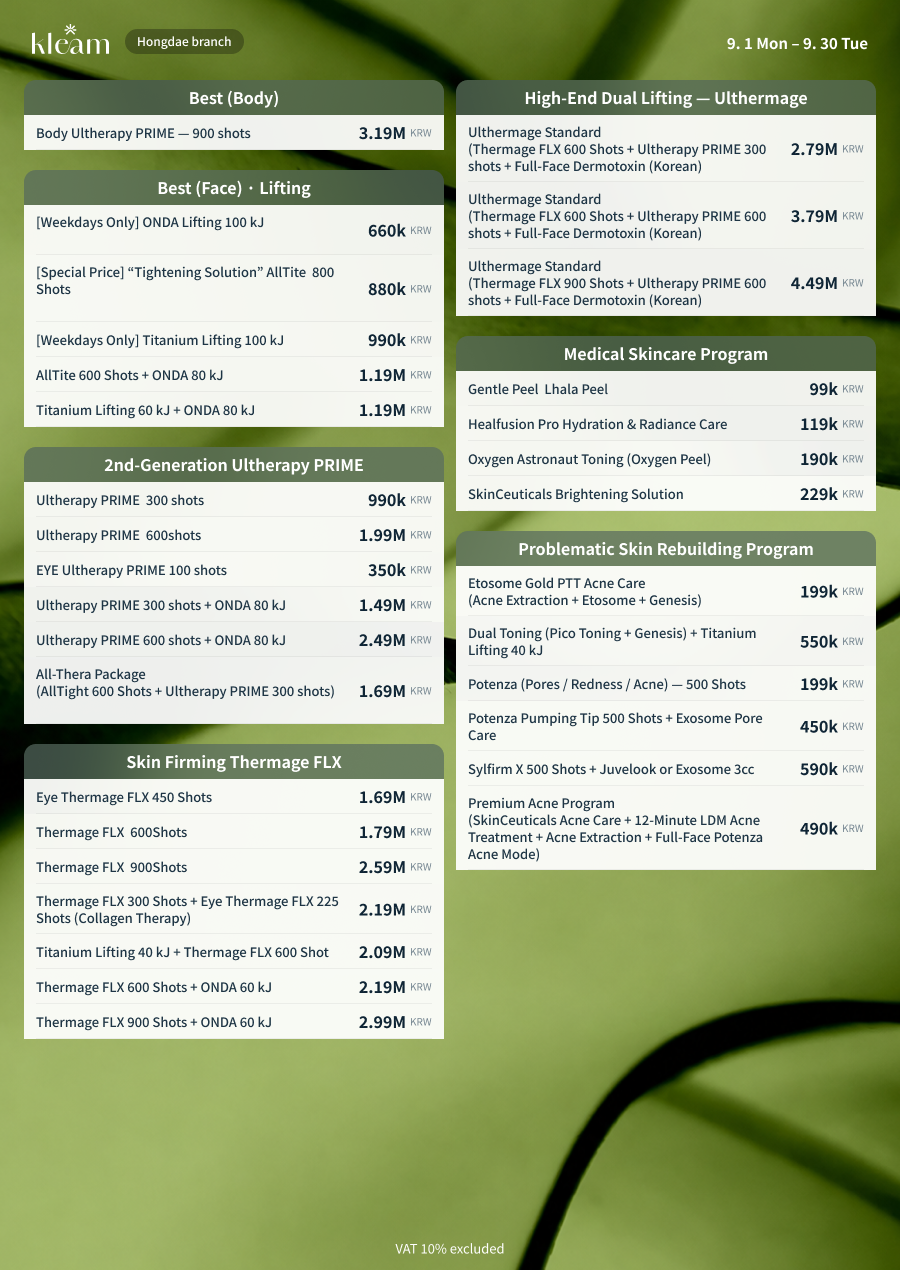
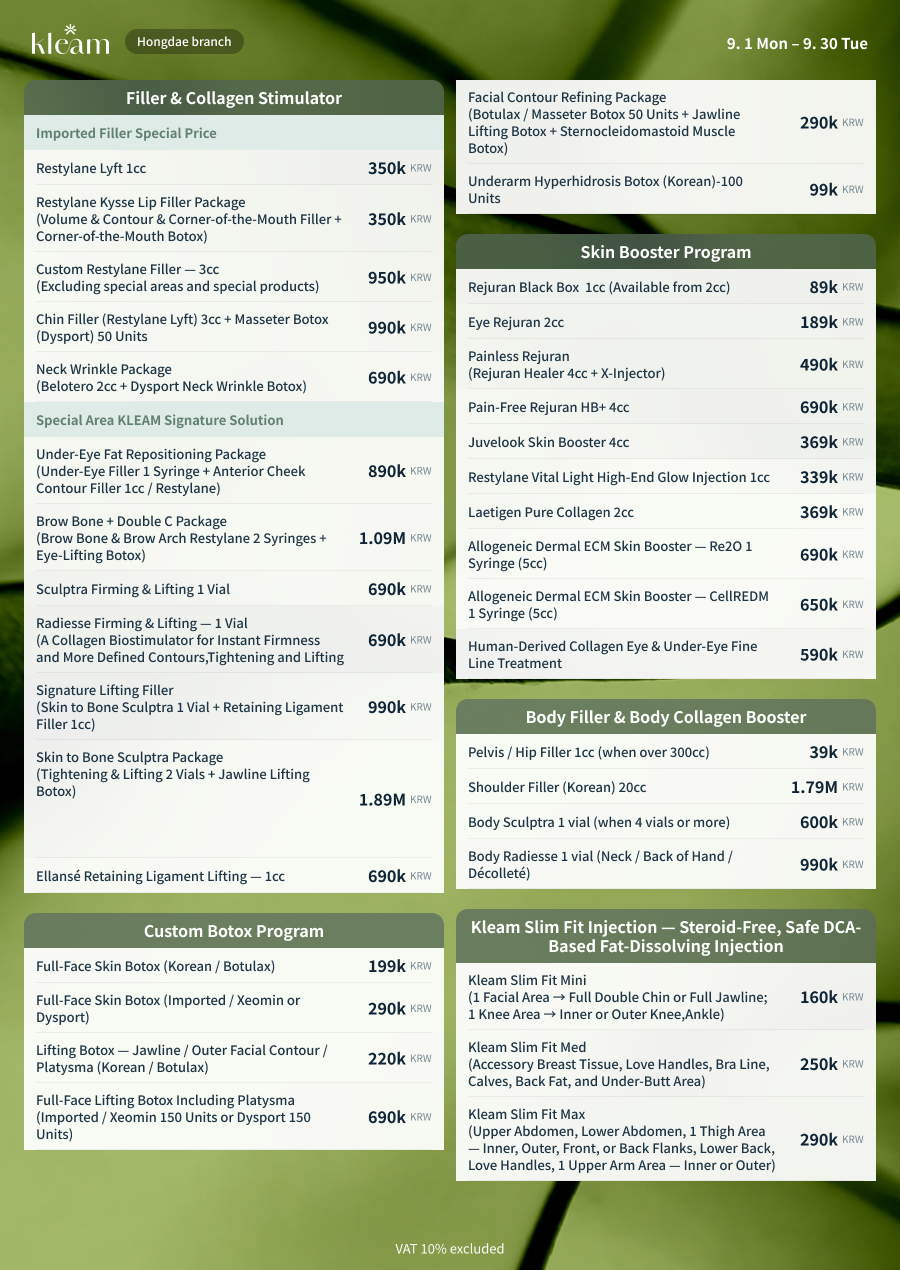
Price drivers include units, shots or cc, genuine tips and products, whether a doctor performs the treatment, number of sessions and packages. 10% VAT is often added to cosmetic procedures, so confirm whether a quote includes it. For current figures, check the current price list, and for market context read How Much Does a Korean Skin Clinic Cost?
What happens after the treatment?
After most procedures you get a calming mask, cooling or LED, then aftercare instructions. Typical guidance includes avoiding makeup for a few hours to a day, skipping saunas and intense exercise for 24–48 hours, using gentle cleanser and moisturizer, and applying sunscreen daily. After acne care or peels, you may be told to avoid exfoliants for several days.
Ask for aftercare in writing or by message so you can check it later at your hotel. Our Korean Skin Treatment Aftercare guide covers this step in depth. Results vary: Botox takes 3–7 days to show, boosters improve skin over weeks, and lifting results build over 2–3 months.
Planning your visit to a skin clinic in Hongdae, Seoul
Hongdae is easy to reach: Hongik Univ. Station is on Line 2, the Gyeongui–Jungang Line and the AREX Airport Railroad, with direct trains to Incheon and Gimpo airports, so a visit fits around arrival or departure.
- Language: ask whether English- or Japanese-speaking staff are available.
- Consultation: many clinics take enquiries by WhatsApp or KakaoTalk. Send photos and your travel dates.
- Confirm details: who performs the treatment, the exact shots, units or cc, and whether VAT is included.
- Prices: check the current Hongdae clinic price list before you book.
- Popular first visits: pico laser in Seoul and skin booster injections.
Leave a buffer before your flight in case of redness or swelling, and compare a few clinics before choosing.
Frequently asked questions
Do I need an appointment at a Korean skin clinic?
Appointments are strongly recommended, especially on weekends. Walk-ins are sometimes possible for simple treatments, but you may wait or be asked to return. Messaging ahead by WhatsApp or KakaoTalk with your goals and travel dates lets the clinic reserve enough time for numbing, consultation and treatment.
Is the consultation free?
Consultation is often free or low cost at Seoul skin clinics, but policies differ, so ask the clinic when you book. The consultation is where a doctor confirms suitability, dose and number of sessions, so it is worth doing properly even if you already know which treatment you want.
Can I get treated on the same day as my consultation?
Usually yes. Most Korean clinics are set up for same-day treatment after consultation, which suits tourists. The exception is when the doctor finds a reason to wait, such as active infection, a recent sunburn, or a medication that needs to be paused first.
How do I pay at a Korean skin clinic?
Payment is normally made at checkout after treatment by card or cash. Quotes may be shown with or without 10% VAT, so confirm the final amount before treatment. Packages for multiple sessions may need to be used within a set period, which matters if you live abroad.
Will staff explain everything in English?
At clinics that serve foreigners, key steps are usually explained in English, and some offer Japanese. Many Hongdae clinics have English- or Japanese-speaking staff for consultations. If anything is unclear, ask staff to repeat it or send instructions in writing.
Related guides
This guide is general information for international visitors, not medical advice. A doctor confirms suitability, dosage and number of sessions at consultation. Prices are approximate Seoul market ranges and change over time — always check the clinic's current price list. Last updated: October 2026.