Aqua Peel vs Chemical Peel: Which Is Better for Korean Glass Skin?
Quick answer: An aqua peel is better for instant glass-skin glow with zero downtime: it deep-cleans pores and floods the skin with hydration, ideal before an event or flight. A chemical peel is better for longer-term glass skin when dullness, rough texture or post-acne marks are the problem, because acids resurface the outer layer. Many Seoul routines combine both with skin boosters.
What does “glass skin” actually require?
Glass skin is the Korean beauty ideal of skin so smooth, clear and hydrated that it reflects light like glass. It is not a single treatment result. It comes from four things working together:
- Clean, refined pores: fewer blackheads and less congestion.
- Smooth texture: a flat surface that reflects light evenly.
- Even tone: fewer dark marks and less redness.
- Deep hydration: plump skin that looks dewy rather than oily.
Aqua peel vs chemical peel matters because each one covers different items on that list. Neither alone handles hydration inside the skin, so clinics in Seoul often add boosters. Explore skin boosters in Hongdae.
What is an aqua peel?
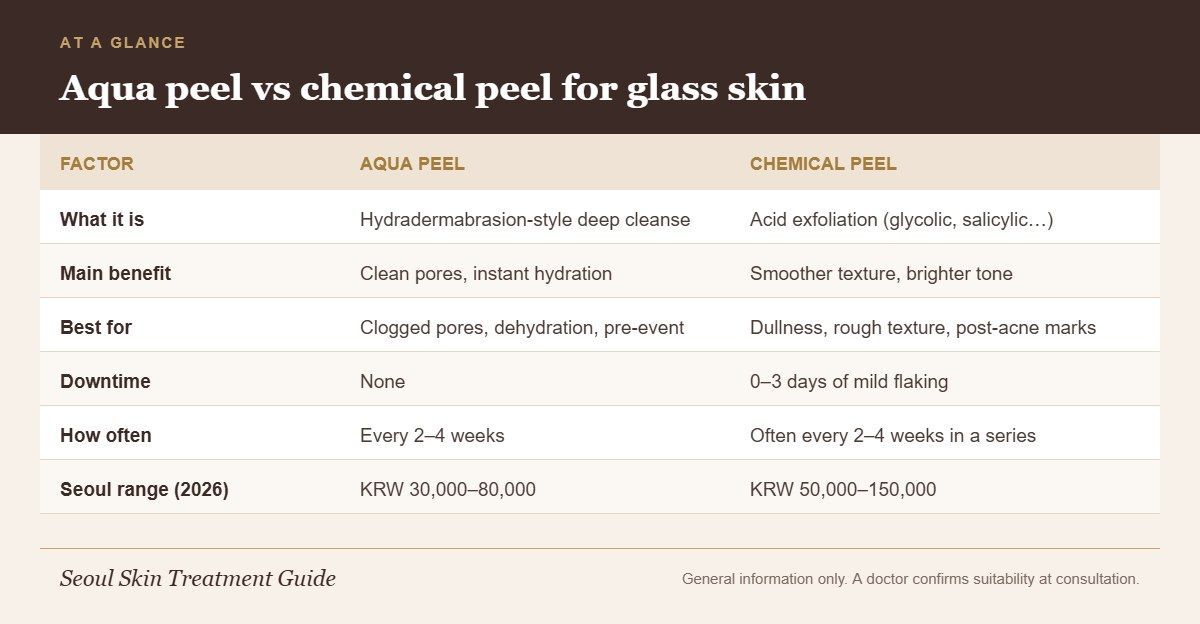
An aqua peel is a hydradermabrasion-style facial that uses a handpiece to cleanse, exfoliate gently and extract debris from pores with water-based solutions and suction, then infuse hydrating serums. It is painless and has no downtime, so it is often called a lunchtime facial.
- Results: brighter, cleaner, more hydrated skin right away.
- Ideal for: congested pores, blackheads, dehydrated or tired skin, and anyone who wants to look fresh the same day.
- Limitations: effects on pigment and texture are mild; it is a maintenance treatment.
Clinics often include it in acne facials or pair it with pore treatments.
What is a chemical peel?
A chemical peel is the controlled application of an acid, such as glycolic, lactic or salicylic acid, to dissolve the bonds between dead surface cells so they shed and reveal smoother, brighter skin. The depth depends on the acid and strength; most glow-focused peels in Korean clinics are superficial. See chemical peels in Seoul.
- Results: smoother texture and gradually brighter tone over a series.
- Ideal for: dull skin, rough texture, mild post-acne marks and oily, acne-prone skin (salicylic acid).
- Limitations: mild stinging, and 0–3 days of dryness or flaking for superficial peels.
Aqua peel vs chemical peel: side-by-side
| Factor | Aqua peel | Chemical peel |
|---|---|---|
| Pore cleansing | Excellent | Good (especially salicylic acid) |
| Texture smoothing | Mild | Moderate |
| Tone and dark marks | Mild | Moderate over a series |
| Instant glow | Yes, same day | Best after a few days |
| Sensitive skin | Usually well tolerated | Needs a gentle formula |
| Downtime | None | 0–3 days |
| Typical Seoul cost (2026) | KRW 30,000–80,000 (about US$21–57) | KRW 50,000–150,000 (about US$36–107) |
How much do aqua peels and chemical peels cost in Seoul?
Both are among the most affordable treatments at Korean skin clinics. In Seoul in 2026, an aqua peel typically costs about KRW 30,000–80,000 and a chemical peel about KRW 50,000–150,000 per session. Acne care that combines extraction with a calming treatment or peel usually runs about KRW 50,000–150,000.
Prices vary with:
- The peel acid and strength, or the serums used in the aqua peel.
- Add-ons such as extraction, LED, modeling masks or ampoules.
- Whether it is bundled with toning or a booster.
- Package pricing, and 10% VAT, usually added to cosmetic procedures.
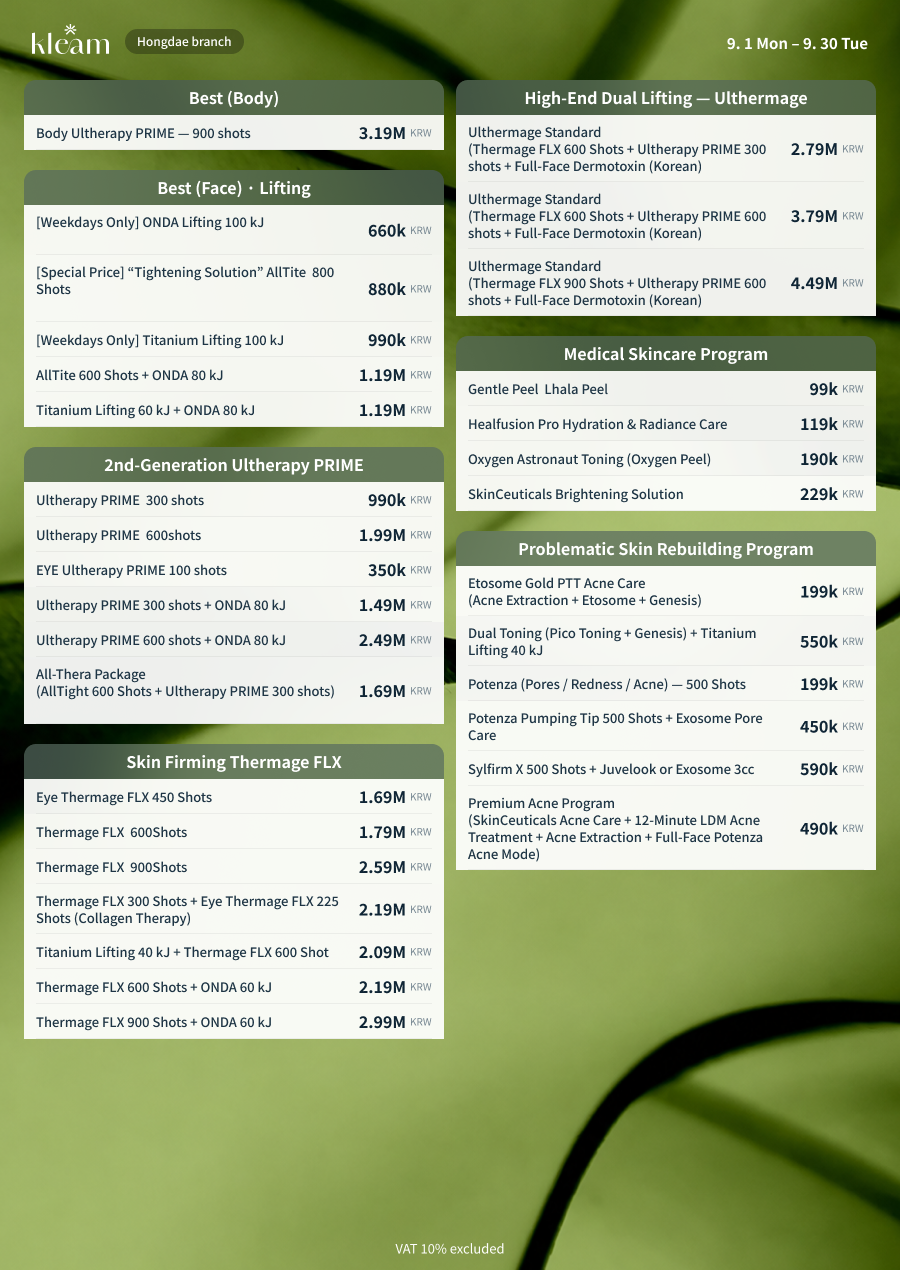
For booster add-ons, water-glow injections typically cost about KRW 100,000–300,000 (about US$71–214). See the skin booster cost guide and acne treatment cost guide, then check the current price list.
What is the best glass-skin plan for your skin type?
Oily, congested skin
Start with an aqua peel or salicylic peel to clear pores. Add laser toning for post-acne marks and ask about skin Botox (micro-Botox) at consultation for oil and pore size.
Dry or dehydrated skin
An aqua peel plus a water-glow skin booster usually gives the most visible dewiness. Keep peels gentle and infrequent.
Dull or uneven skin
A chemical peel series, alternated with laser toning, works on tone and surface brightness. Our guide Laser Toning vs Chemical Peel compares those two in detail.
Sensitive or redness-prone skin
Aqua peel is usually the gentler choice. Skin-repair boosters such as Rejuran Healer can strengthen skin quality over 3–4 sessions, with small bumps for 24–48 hours.
For the full menu of options, see Best Korean Treatments for Glass Skin.
Which is better before a flight or a big event?
Aqua peel wins for timing. You can have one on the morning of a dinner, shoot or flight and walk out glowing. A chemical peel is best booked at least 3–5 days before an important event so any dryness or flaking has passed.
If you are only in Seoul for a few days, a common plan is an aqua peel early in the trip, a water-glow booster if suitable, and a home-care routine with sunscreen. Longer-stay expats in Hongdae can follow a peel series every 2–4 weeks.
Planning your visit to a skin clinic in Hongdae, Seoul
Hongdae is easy to reach: Hongik Univ. Station is on Line 2, the Gyeongui–Jungang Line and the AREX Airport Railroad, which runs directly to Incheon and Gimpo airports, so a pre-flight glow visit is simple to fit in.
- Ask for English- or Japanese-speaking staff when you book.
- Many clinics take consultations by WhatsApp or KakaoTalk; send a bare-skin photo, mention your skin type and share your travel dates.
- Confirm who performs the treatment, the peel acid or serums used, and whether 10% VAT is included.
- Check the current Hongdae clinic price list before you decide.
- Leave a buffer before events or flights if you choose a chemical peel.
To prepare, read about acne facials, chemical peels in Seoul and skin boosters.
Frequently asked questions
Is an aqua peel or chemical peel better for glass skin?
For instant glow with no downtime, an aqua peel is better. For lasting improvement in texture, tone and dullness, a chemical peel series usually does more. Many people in Seoul alternate the two and add hydrating skin boosters, because glass skin needs both a smooth surface and deep hydration.
How often should I get an aqua peel?
Many people book an aqua peel every 2–4 weeks as maintenance, especially if they have oily skin or clogged pores. Because it has no downtime, it fits easily into a busy schedule or short trip. The clinic can adjust frequency based on how your skin responds.
Does a chemical peel hurt?
Superficial peels usually cause tingling or mild stinging for a few minutes while the acid is on the skin, then a cooling or neutralizing step. Afterward, skin may feel tight or dry and flake lightly for 0–3 days. Stronger peels feel more intense and need more recovery.
Can I combine a peel with skin boosters or laser?
Yes. In Korea, peels are often paired with laser toning or skin boosters such as water-glow injections or Rejuran. Some combinations happen on the same day, others are spaced out. The doctor decides the order based on your skin's sensitivity and your schedule.
Are peels safe for sensitive skin or during pregnancy?
Aqua peels are usually well tolerated by sensitive skin. Chemical peels need a gentle formula, and some acids may not be recommended during pregnancy or breastfeeding. Tell the doctor about pregnancy, retinoid use, rosacea or eczema so they can choose a suitable option.
Related guides
This guide is general information for international visitors, not medical advice. A doctor confirms suitability, dosage and number of sessions at consultation. Prices are approximate Seoul market ranges and change over time — always check the clinic's current price list. Last updated: October 2026.