Best Korean Treatments for Glass Skin
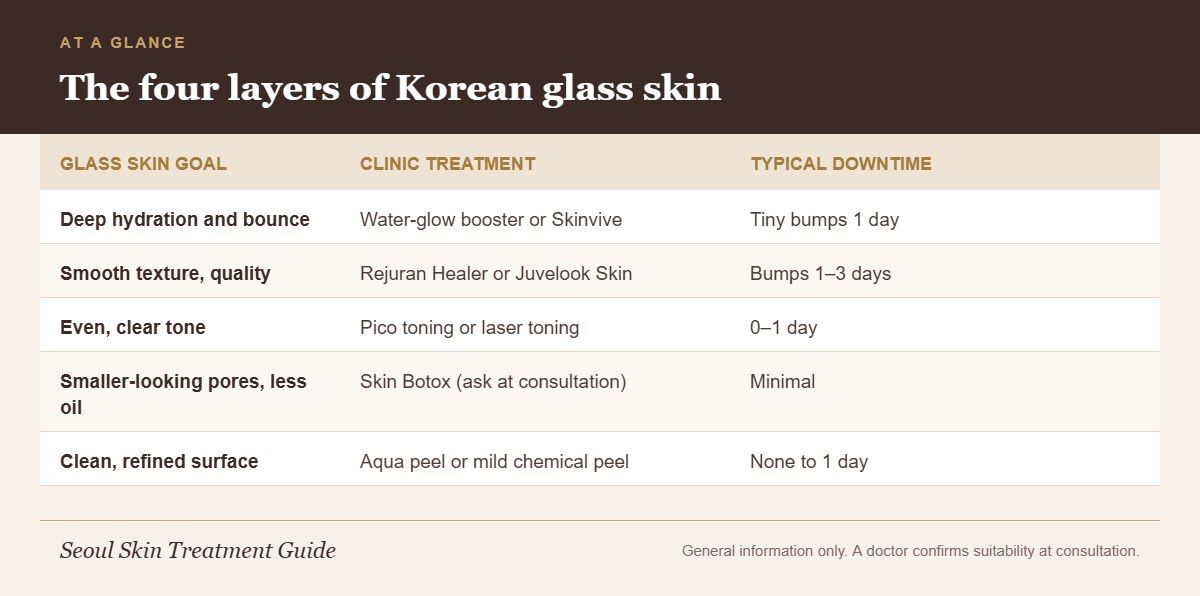
Quick answer: The best Korean treatments for glass skin combine hydration, texture and tone. Water-glow skin boosters or Skinvive add dewy moisture, Rejuran Healer refines texture, pico toning or laser toning evens tone, skin Botox can reduce oil and pore look, and Aqua peels keep the surface clean. Most have 0–3 days of downtime in Seoul.
What is glass skin, and can a clinic really create it?
Glass skin is the Korean beauty ideal of skin so smooth, clear and hydrated that it reflects light like glass. It is less about makeup and more about four qualities: water content, fine texture, even tone and small-looking pores.
Skincare maintains these qualities, but Korean dermatology clinics can accelerate them. Injectables deliver hydration and repair ingredients into the skin, while low-downtime lasers clear pigment and dullness. Realistic expectations matter: the goal is healthier, brighter skin, not a filter. Pores do not disappear and results vary by skin type.
Which Korean treatments give the best glass skin results?
Water-glow skin boosters and Skinvive
Hydrating skin boosters place tiny amounts of hyaluronic acid across the face to plump fine lines and add a dewy look. Skinvive is a hyaluronic acid microdroplet product designed for skin smoothness and glow. Both work within days and suit visitors with only a short time in Seoul. Read about skin boosters in Korea.
Rejuran Healer and Juvelook Skin
Rejuran Healer is a polynucleotide injectable derived from salmon DNA that supports repair, elasticity and texture. It is the go-to for rough, tired or post-acne skin, usually in 3–4 sessions 2–4 weeks apart. Juvelook Skin uses PDLLA and hyaluronic acid to build collagen gradually over 2–3 sessions. Explore Rejuran Healer in Seoul and Juvelook.
Pico toning and laser toning
Uneven tone breaks the glassy reflection. Pico laser in Seoul uses picosecond pulses to break up pigment, and laser toning uses low-fluence Nd:YAG energy for gradual brightening. Both have 0–1 day of downtime and usually work across a series of sessions.
Skin Botox for pores and oil
Skin Botox, sometimes called micro-Botox, places diluted toxin superficially to reduce oiliness and the look of pores and fine texture for about 2–4 months. Ask about skin Botox (micro-Botox) at consultation. Our comparison Rejuran vs Skin Botox: Which Is Better for Glass Skin? explains who suits each.
Aqua peel and gentle chemical peels
An Aqua peel is a hydradermabrasion-style deep cleanse that clears congested pores without heavy acids. Mild chemical peels use glycolic or salicylic acids to smooth the surface. See chemical peels in Korea and our guide Aqua Peel vs Chemical Peel: Which Is Better for Korean Glass Skin?
How do glass skin treatments compare?
| Treatment | Main glass skin benefit | Sessions | Typical Seoul range (approx.) |
|---|---|---|---|
| Water-glow booster | Dewy hydration | 1–3 | KRW 100,000–300,000 (US$70–210) |
| Rejuran Healer 2cc | Texture, repair | 3–4 | KRW 200,000–450,000 (US$140–320) |
| Juvelook Skin | Collagen, firmness | 2–3 | KRW 250,000–500,000 (US$180–360) |
| Skin Botox, full face | Pores, oil, fine texture | Every 2–4 months | KRW 100,000–300,000 (US$70–210) |
| Pico toning | Even tone, clarity | 5–10 | KRW 50,000–150,000 (US$40–110) |
| Aqua peel | Clean, smooth surface | As needed | KRW 30,000–80,000 (US$20–60) |
These are approximate 2026 Seoul market ranges. Prices vary with product and cc, number of sessions, packages, whether numbing and calming masks are included, and the 10% VAT usually added. Check the current price list and our Skin Booster Cost in Korea: Rejuran, Juvelook & Exosome Prices.
What is a good glass skin plan for a short trip to Seoul?
If you have about 4–7 days, a common approach is to front-load treatments so any bumps settle before you fly. A doctor adjusts this to your skin.
- Day 1: consultation, Aqua peel to clear the surface, then pico or laser toning.
- Day 1 or 2: hydrating booster or Rejuran Healer; ask about skin Botox if oil and pores bother you.
- Days 2–4: injection bumps fade; keep skincare simple and avoid saunas for 24–48 hours.
- Before you fly: SPF 50, a bland moisturizer and sheet masks only if they do not sting.
Expats living in Seoul can build a longer program: Rejuran every 2–4 weeks for 3–4 sessions, monthly toning, and a booster before special events.
Who should be careful with glass skin treatments?
- Melasma: laser toning is commonly used, but melasma needs maintenance and has no permanent cure; IPL can worsen it in some people. See dull skin treatment options.
- Active acne: calm breakouts first with acne care before injecting boosters across the face.
- Very sensitive skin: start with a hydration booster and gentle toning before peels.
- Pregnancy or breastfeeding: tell the doctor; most injectables and lasers are postponed.
How long do glass skin results last?
Hydration boosters usually look best for a few weeks to a few months. Rejuran and Juvelook improve skin quality gradually, with results that build over the series and are often maintained with periodic sessions. Skin Botox lasts about 2–4 months. Toning results depend on sun protection: daily SPF is the single biggest factor in keeping tone even.
Planning your visit to a skin clinic in Hongdae, Seoul
Hongdae works well for a glass skin plan on a short trip. Hongik Univ. Station is served by Line 2, the Gyeongui–Jungang Line and the AREX Airport Railroad, which runs directly to Gimpo and Incheon airports. Many clinics in the area have English- or Japanese-speaking staff.
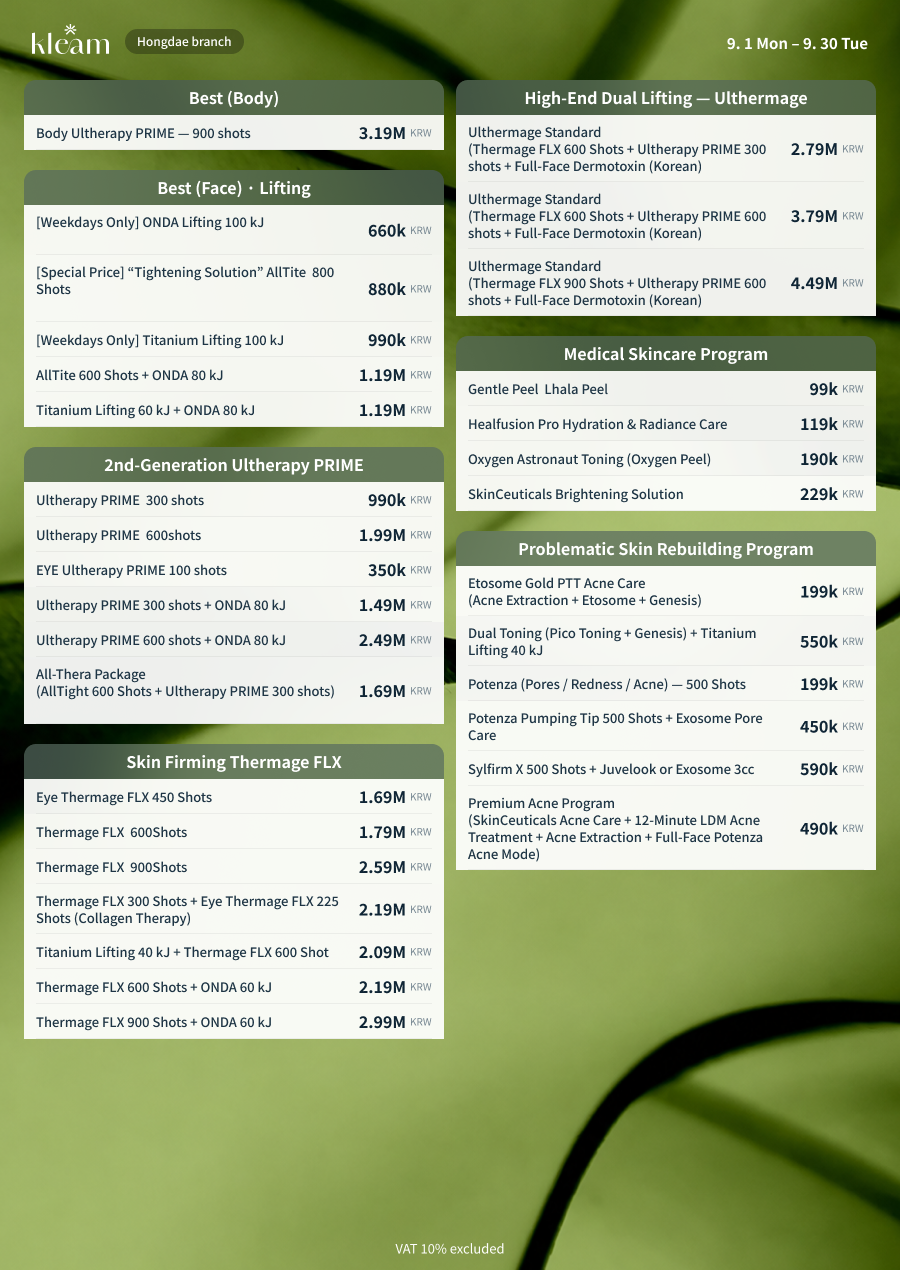
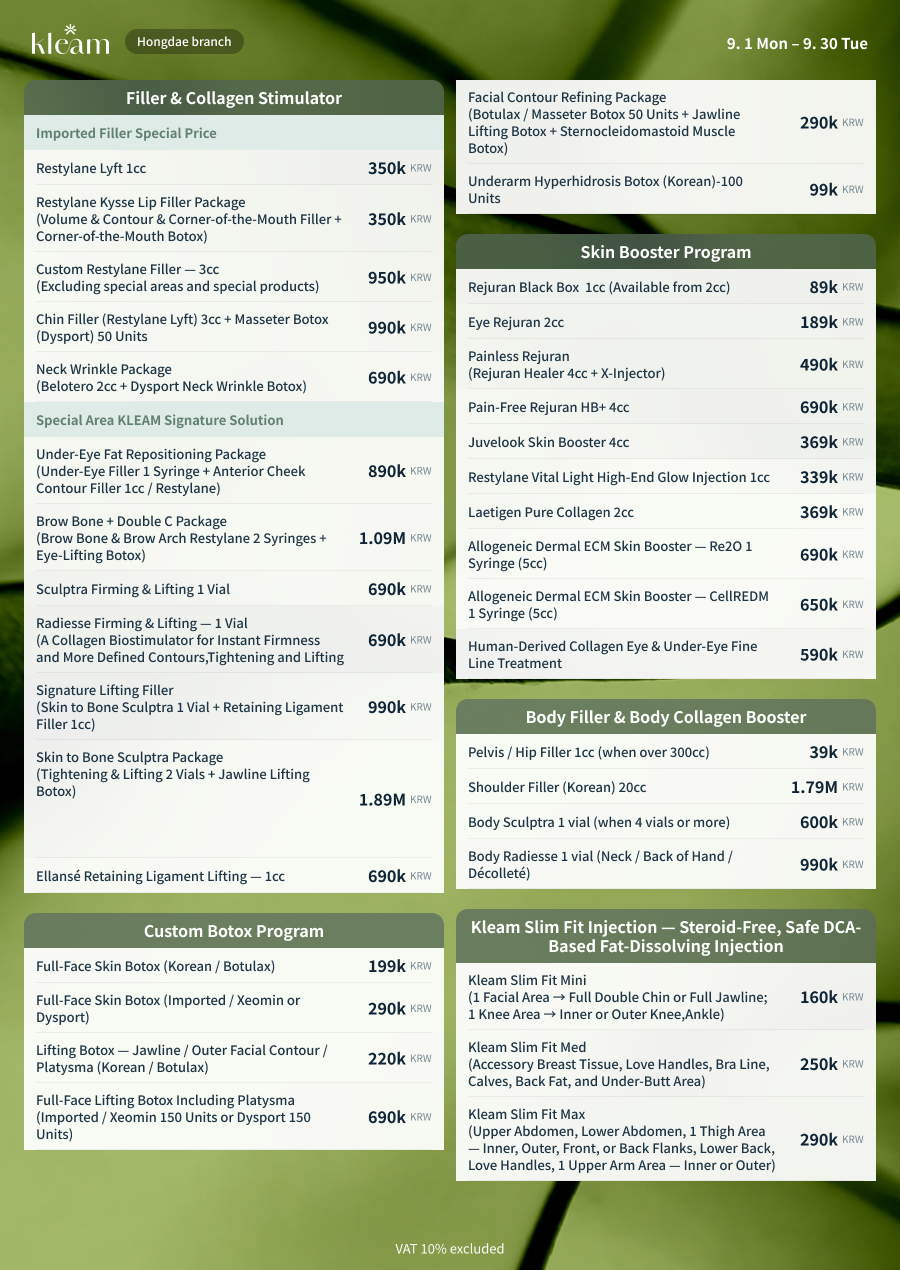
Many clinics take consultations by WhatsApp or KakaoTalk, so send your skin concerns, photos and travel dates in advance. Before booking, confirm who performs the treatment, the exact shots, units or cc, and whether VAT is included. Check the current Hongdae clinic price list, plus pore treatments and skin rejuvenation in Korea. Leave a buffer before your flight so injection bumps can settle.
Frequently asked questions
What is the fastest Korean treatment for glass skin?
A hydrating skin booster such as a water-glow injection or Skinvive usually gives the quickest visible glow, often within a few days once small bumps settle. Pairing it with an Aqua peel or a pico toning session in the same visit adds clarity. Longer-lasting texture changes come from Rejuran or Juvelook over several sessions.
How many sessions do I need for glass skin?
You can see a difference after one booster plus toning visit, but lasting improvement usually takes a series. Rejuran is typically 3–4 sessions 2–4 weeks apart, Juvelook 2–3 sessions about 4 weeks apart, and toning 5–10 sessions. A doctor tailors the plan to your skin and time in Korea.
Do skin booster injections hurt?
Numbing cream is applied for 20–40 minutes beforehand, so most people describe boosters as tolerable pricks. Rejuran HB contains lidocaine for extra comfort. Expect small raised bumps for 24–48 hours, which can be covered lightly with makeup the next day if the doctor allows it.
Can I get glass skin treatments before a flight?
Toning and Aqua peels typically allow flying the next day. Boosters and Rejuran leave small bumps for 1–3 days, so schedule them at least a couple of days before departure if you want photos. Drink water and use a rich moisturizer on the plane, since cabin air is dry.
Is glass skin possible for oily or acne-prone skin?
Yes, though the plan differs. Oily skin often benefits from skin Botox to reduce oil, Aqua peels for congestion and acne care before boosters. Lightweight hydration still matters, because dehydrated oily skin can look dull. A doctor checks for active acne before recommending injections across the face.
Related guides
This guide is general information for international visitors, not medical advice. A doctor confirms suitability, dosage and number of sessions at consultation. Prices are approximate Seoul market ranges and change over time — always check the clinic's current price list. Last updated: October 2026.