Best Skin Boosters in Korea: Rejuran, Juvelook, Exosome & More
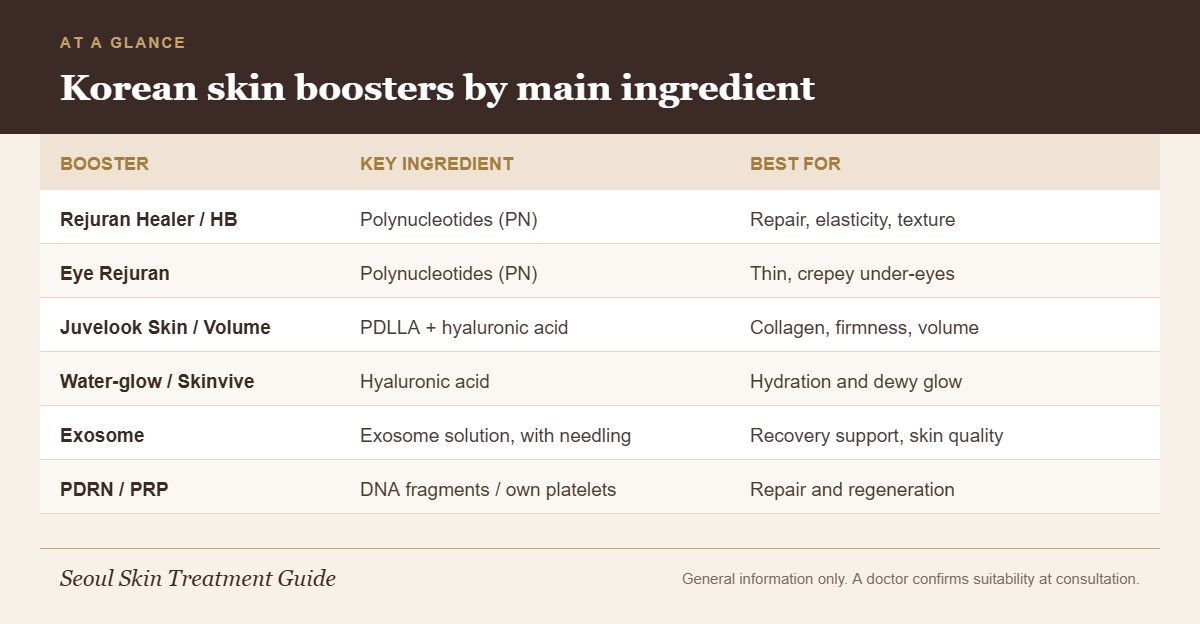
Quick answer: The best skin boosters in Korea depend on your goal. Rejuran Healer is best for repair and texture, Juvelook for collagen and firmness, water-glow boosters and Skinvive for instant hydration, and exosome for supporting recovery after microneedling or laser. PDRN and PRP are alternatives for regeneration. A Seoul doctor often combines two for faster results.
What is a skin booster?
A skin booster is an injectable treatment that places small amounts of an active ingredient into the skin to improve its quality: hydration, smoothness, elasticity and glow. Unlike fillers, boosters are not designed to lift or reshape. They are spread across the face in many tiny injections, often with a needle or an injector device.
Korea popularized boosters because they suit the local preference for natural, healthy-looking skin with little downtime. For foreigners, they are among the easiest treatments to fit into a trip to Seoul.
Which skin booster is best for each skin goal?
Rejuran Healer: repair and texture
Rejuran Healer contains polynucleotides (PN) derived from salmon DNA. It supports skin repair, elasticity and texture, which makes it popular for tired, rough or post-acne skin. A typical course is 3–4 sessions spaced 2–4 weeks apart, with bumps for 24–48 hours. Rejuran HB adds lidocaine, and eye Rejuran is designed for the under-eye area. See Rejuran Healer in Seoul.
Juvelook and Juvelook Volume: collagen and firmness
Juvelook combines PDLLA, a collagen stimulator, with hyaluronic acid. Juvelook Skin targets fine lines, pores and thin skin, while Juvelook Volume has a higher PDLLA content for areas that need gentle volume. Most people do 2–3 sessions about 4 weeks apart. Learn about Juvelook in Korea and other collagen stimulators.
Water-glow boosters and Skinvive: hydration
Hyaluronic acid boosters draw water into the skin for a dewy, plumper look within days. They are ideal before an event or as a first booster. See skin boosters in Korea.
Exosome: recovery support
Exosome treatments are usually applied with microneedling or laser to support recovery and overall skin quality. They are popular in Korea, but the evidence is still developing, so treat them as an add-on rather than a stand-alone solution. Read about exosome treatment in Seoul.
PDRN and PRP: regeneration options
PDRN uses DNA fragments to support tissue repair, and PRP uses platelets concentrated from your own blood. Both are used for skin regeneration, often with microneedling. See PRP injections in Korea.
How do Rejuran, Juvelook and exosome compare?
| Factor | Rejuran Healer | Juvelook Skin | Exosome | Water-glow booster |
|---|---|---|---|---|
| Main action | Repair, elasticity | Collagen building | Recovery support | Hydration |
| Sessions | 3–4, 2–4 weeks apart | 2–3, about 4 weeks apart | 3–5, often monthly | 1–3 |
| Visible results | Builds over weeks | Builds over 1–3 months | Gradual | Within days |
| Downtime | Bumps 1–2 days | Bumps 1–3 days | Depends on needling or laser | About 1 day |
| Typical Seoul range (approx.) | KRW 200,000–450,000 (US$140–320) for 2cc | KRW 250,000–500,000 (US$180–360) | KRW 150,000–400,000 (US$110–290) | KRW 100,000–300,000 (US$70–210) |
For a deeper side-by-side, read Juvelook vs Rejuran vs Exosome: Which Skin Booster Should You Choose? or the two-way Rejuran vs Juvelook: Which Skin Booster Is Better?
How much do skin boosters cost in Seoul?
Approximate 2026 Seoul market ranges per session: Rejuran HB or eye Rejuran about KRW 200,000–400,000 (US$140–290), Juvelook Volume about KRW 400,000–800,000 (US$290–570), and the options in the table above. These are not the prices of any single clinic.
What changes the price:
- Product and volume (for example 2cc vs 4cc of Rejuran)
- Number of sessions and whether you buy a package
- Whether the booster is combined with microneedling, laser or exosome
- Numbing cream, calming masks and aftercare products
- The 10% VAT usually added to cosmetic procedures
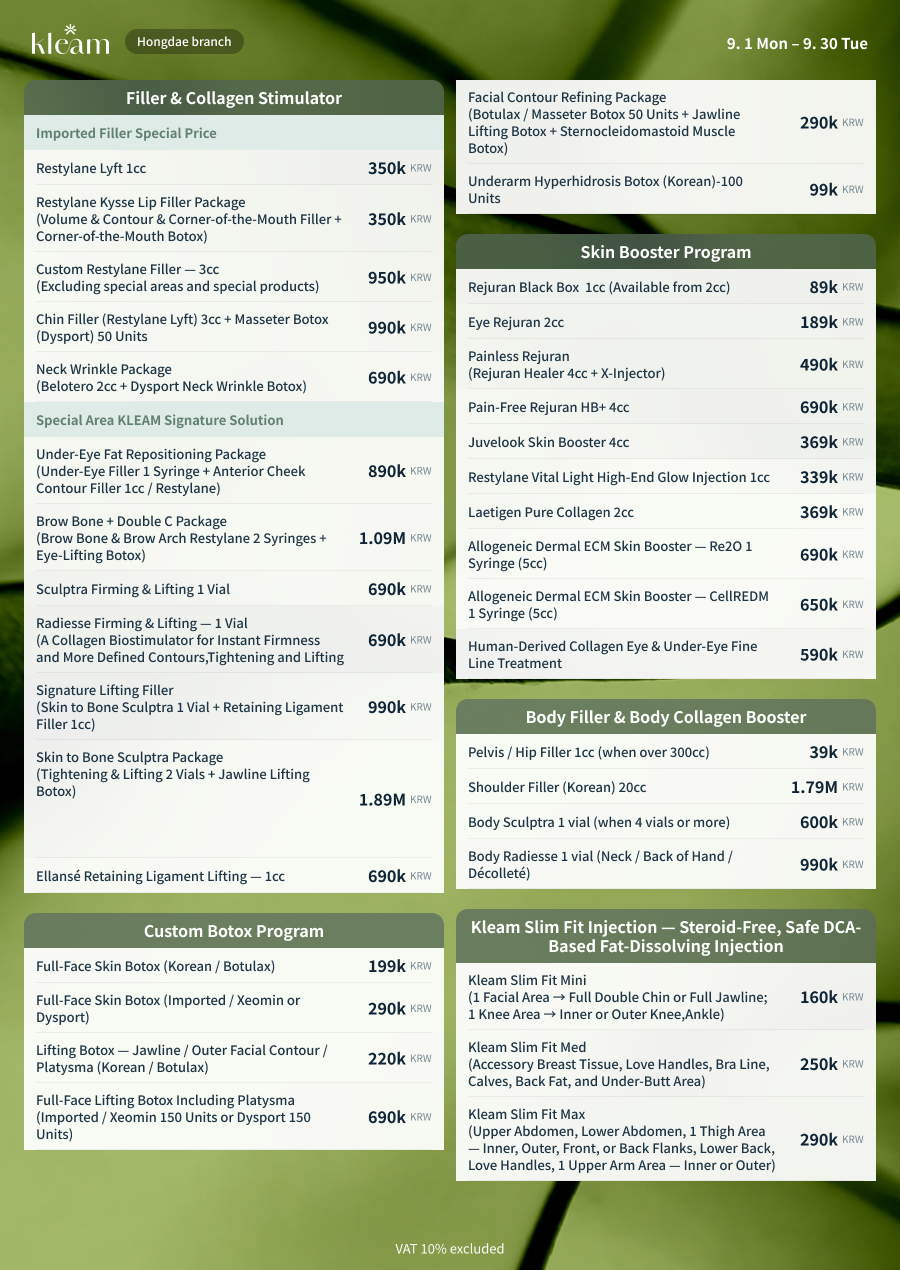
See the current price list for exact figures and current promotions, and our full Skin Booster Cost in Korea: Rejuran, Juvelook & Exosome Prices.
Can you combine skin boosters?
Yes, combinations are common in Seoul because boosters work in different ways. Typical pairings include:
- Rejuran plus a hydration booster: repair and instant glow in one visit.
- Exosome after microneedling or laser: to support recovery and skin quality.
- Juvelook plus Rejuran on alternating visits: collagen building with repair.
- Boosters plus Botox: skin quality plus smoother expression lines.
A doctor decides the order, dosage and spacing. Tell the clinic about allergies (including fish or salmon for Rejuran), blood thinners, and whether you are pregnant or breastfeeding, as treatment is usually postponed.
How should travelers schedule skin boosters?
Most boosters leave small raised bumps for 1–3 days, with possible pinpoint bruises. Schedule them early in your stay, avoid saunas, alcohol and intense exercise for 24–48 hours, and use SPF daily. If you want a full course of Rejuran or Juvelook, plan to return every 2–4 weeks, or begin in Seoul and continue at home with your own doctor.
Planning your visit to a skin clinic in Hongdae, Seoul
Hongdae is an easy place to fit in a booster session. Hongik Univ. Station is served by Line 2, the Gyeongui–Jungang Line and the AREX Airport Railroad, which runs directly to Gimpo and Incheon airports. Many clinics in the area have English- or Japanese-speaking staff who can explain the differences between boosters before you decide.
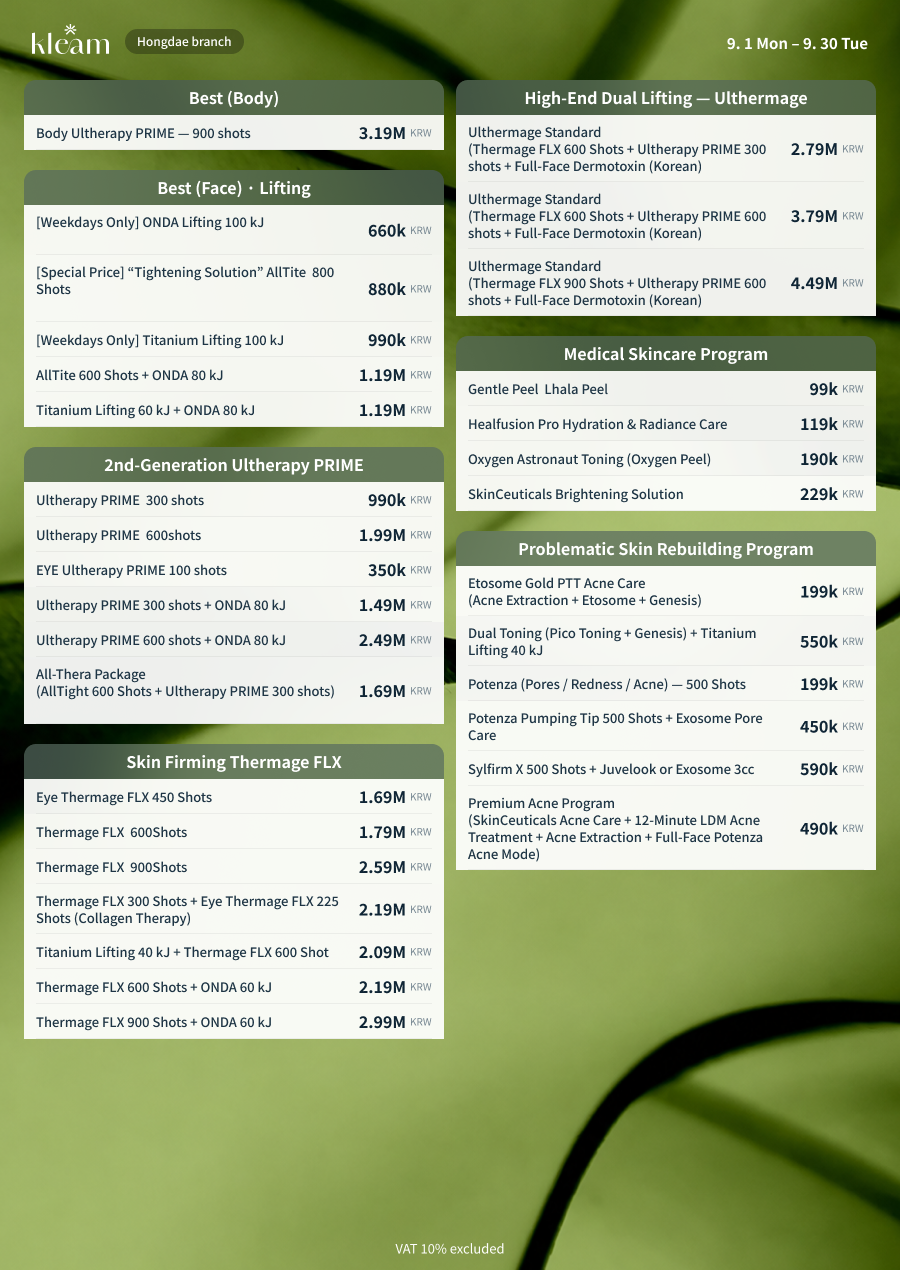
Many clinics take consultations by WhatsApp or KakaoTalk, so send photos of your skin and your travel dates. Before booking, confirm who performs the treatment, the exact product, cc and number of sessions, and whether VAT is included. Compare quotes with the current Hongdae clinic price list, and see the Rejuran, Juvelook and microneedling pages. Leave a buffer before your flight so bumps can settle.
Frequently asked questions
Which is the best skin booster in Korea for first-timers?
Many first-timers start with a hydrating booster or Rejuran Healer. A hydration booster gives quick, visible glow with little downtime, while Rejuran improves texture and resilience over several sessions. If firmness and fine lines matter most, Juvelook may suit better. A doctor recommends one based on your skin and how long you will stay in Seoul.
How long do skin booster results last?
Hydration boosters typically last a few weeks to a few months. Rejuran and Juvelook build results over a series, and many people maintain them with sessions every few months. Exosome is usually repeated as part of a series. Lifestyle, sun protection and skin type all influence how long results last.
Do skin boosters hurt?
Numbing cream is applied for about 20–40 minutes first, so most people describe boosters as many quick, sharp pricks. Rejuran HB contains lidocaine for added comfort. Juvelook can sting a little more due to its particles. Discomfort usually stops soon after treatment, leaving mild tenderness and bumps.
Can I fly after Rejuran or Juvelook?
Flying the next day is generally fine. The main issue is cosmetic: small bumps last about 1–3 days and may be noticeable in photos. Stay hydrated on the flight, avoid touching or massaging your face unless instructed, and use a gentle moisturizer and sunscreen when you land.
Is exosome better than Rejuran?
They do different jobs. Rejuran is an injectable polynucleotide with a well-established role in skin repair, while exosome is usually applied after microneedling or laser to support recovery, and its evidence is still developing. Some patients combine them. A doctor can explain which fits your skin goals and budget.
Related guides
This guide is general information for international visitors, not medical advice. A doctor confirms suitability, dosage and number of sessions at consultation. Prices are approximate Seoul market ranges and change over time — always check the clinic's current price list. Last updated: October 2026.