Korean Skin Clinic Before Your Flight: What Treatments Are Safe?
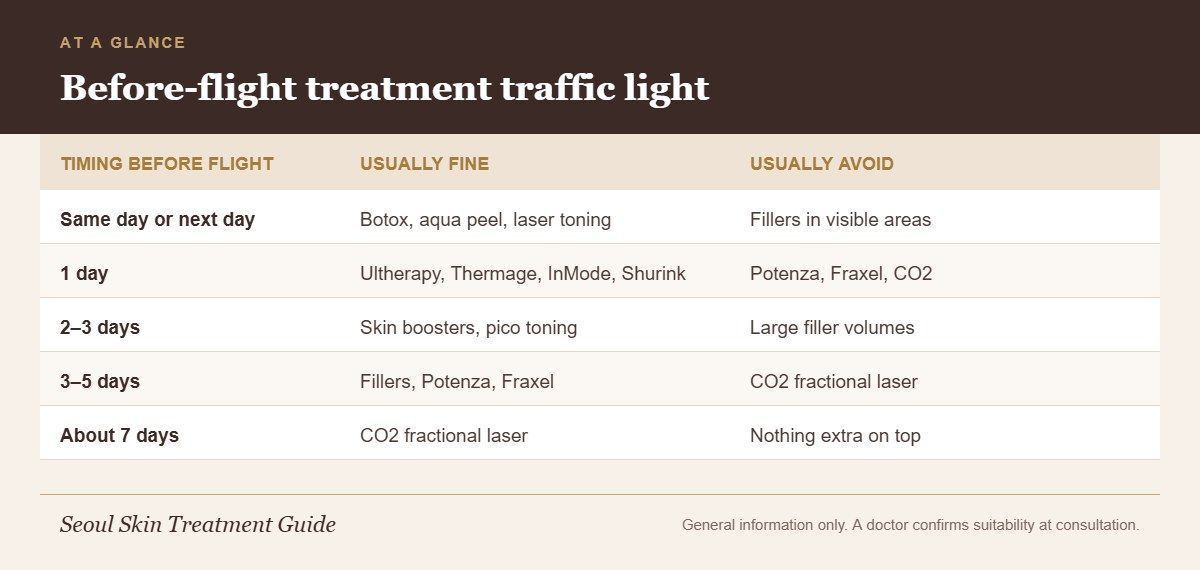
Quick answer: Before your flight from Korea, the safest skin treatments are low-downtime ones: Botox, laser toning, Aqua peel and lifting devices such as Ultherapy, Thermage FLX, InMode or Shurink, ideally at least one day before flying. Skin boosters need 2–3 days, fillers about 3–4, Potenza or Fraxel 4–5, and CO2 laser about a week.
Is it safe to fly after a skin treatment in Korea?
For most treatments, yes. Botox, lasers and lifting devices do not react badly to cabin pressure, and most doctors in Seoul are used to patients flying home a day or two later. The real issues are practical: swelling can feel worse after hours of sitting, cabin air is very dry, and you may have limited access to the clinic if something needs checking.
So the question is less whether a Korean skin clinic before your flight is safe, and more which treatments match the time you have left. Tell the doctor your exact departure time at consultation, not only the date.
Which treatments are usually fine before a flight?
Botox
Botox in Seoul is the classic pre-flight treatment. Flying the next day is usually fine. Avoid massage, saunas and pressing on treated areas for 24–48 hours; that includes sleeping masks pressed hard on the forehead and resting your face on a tray table.
Lifting devices
Ultherapy, Thermage FLX, InMode and Shurink have 0–1 day of downtime. You may feel tender along the jaw or see mild redness for a few hours. Results build over 2–3 months, so nothing needs to settle before you fly. See Ultherapy in Hongdae and InMode lifting.
Gentle lasers and facials
Laser toning, pico toning and an Aqua peel (see acne facials in Seoul) usually leave only mild redness. Pack sunscreen, because window seats get strong UV.
Which treatments need more time before flying?
| Treatment | Why wait | Typical buffer before flight |
|---|---|---|
| Skin boosters (Rejuran, Juvelook, water-glow) | Bumps and small bruises for 1–3 days | 2–3 days |
| Fillers | Swelling for 2–3 days; shape easier to judge after | 3–4 days |
| Potenza or Fraxel | Redness and roughness for 2–5 days | 4–5 days |
| CO2 fractional laser | Open micro-wounds and crusting for 5–7 days | About 7 days |
| Strong chemical peel | Peeling and sensitivity | Depends on depth; ask |
With dermal fillers in Korea, swelling can feel more noticeable on a long flight, and if anything needs adjusting it is much easier to return to the clinic in person. CO2 fractional laser leaves the skin open while it heals, so a dusty airport and dry cabin are not ideal in the first few days. For a full schedule by treatment, see How Long Should You Stay in Korea After a Skin Treatment?
How should you care for your skin on the plane?
- Hydrate inside and out. Drink water, limit alcohol and caffeine, and apply a gentle, fragrance-free moisturizer.
- Skip heavy makeup for the first day after lasers or injections, unless the clinic says otherwise.
- Protect from sun. Use sunscreen and close the window shade, especially after laser or peels.
- Do not press or massage treated areas. Use a neck pillow rather than resting your face on your hands.
- Keep hands clean and avoid touching injection points or lasered skin.
- Pack your aftercare products in your carry-on, within liquid limits.
Our aftercare guide for foreigners covers what to use and avoid in the days after.
What can you get on your last day in Seoul?
If you have a few hours before heading to the airport, focus on treatments with almost no visible recovery:
- Botox for forehead, frown lines, crow’s feet or jaw.
- Laser toning or pico toning for tone and dullness.
- A lifting device session if you can accept mild redness.
- An Aqua peel or gentle chemical peel for a fresh, clean look.
- A hydrating skin booster only if you are comfortable flying with small bumps.
For more options that fit tight schedules, read Korean Dermatology Treatments With Little or No Downtime.
What should you tell the clinic about your flight?
A few details help the doctor choose safely and avoid last-minute stress:
- Departure time and airport , Incheon or Gimpo, so the appointment ends with plenty of travel time.
- Flight length : a short hop to Japan or China is different from a 12-hour long-haul flight when it comes to swelling and dryness.
- What happens after you land , such as work, meetings or events where visible bumps or redness would matter.
- Any earlier treatments on this trip , so new ones do not overlap on the same area.
If the doctor suggests postponing a treatment to your next visit, that usually reflects careful planning rather than caution for its own sake.
How much do flight-friendly treatments cost in Seoul?
Typical Seoul market ranges in 2026 (approximate, per session):
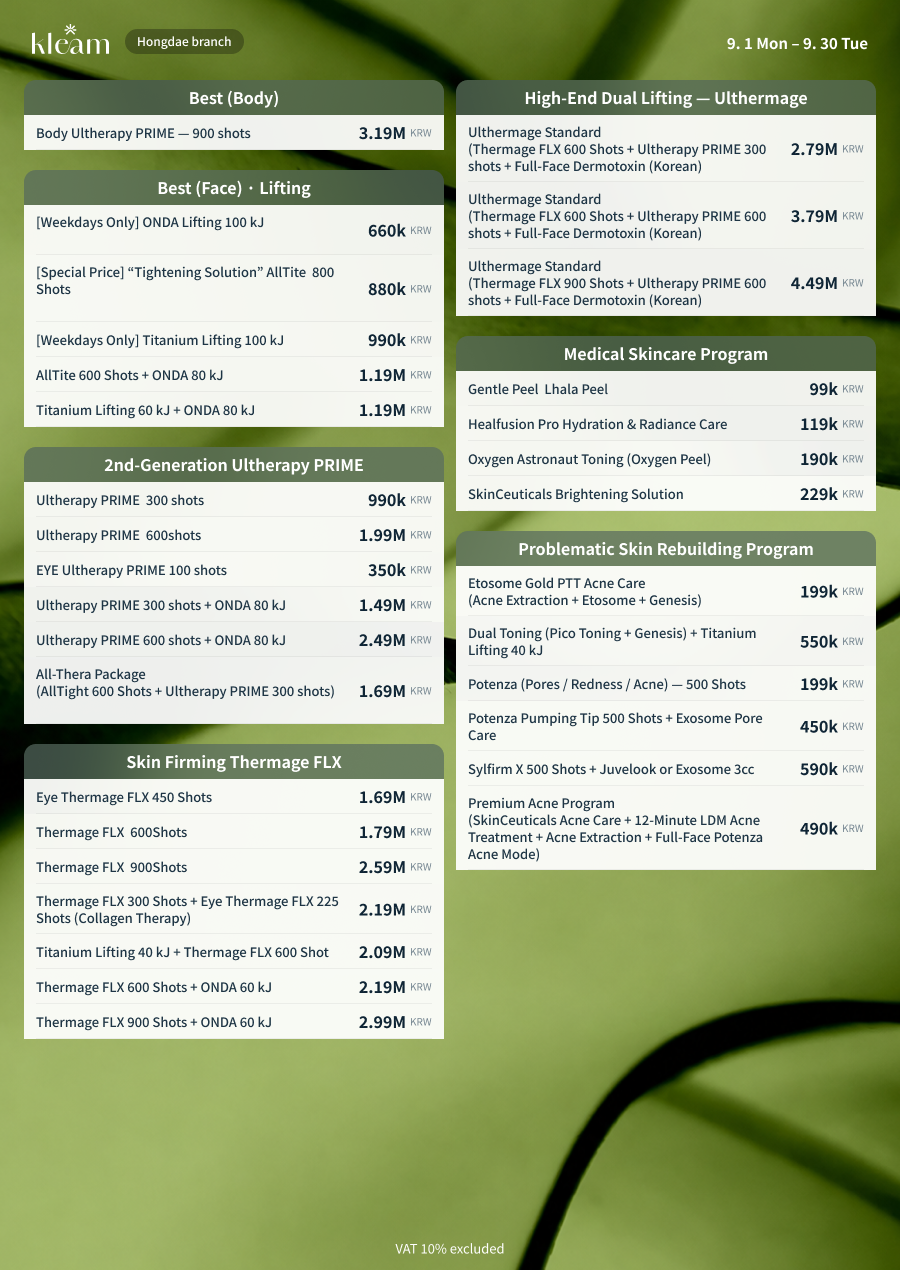
- Ultherapy 100 lines: about KRW 300,000–600,000 (roughly US$210–430).
- InMode (Forma / FX) full face: about KRW 100,000–400,000 (roughly US$71–286).
- Jaw (masseter) Botox, imported toxin: about KRW 150,000–350,000 (roughly US$107–250).
- Aqua peel: about KRW 30,000–80,000 (roughly US$21–57).
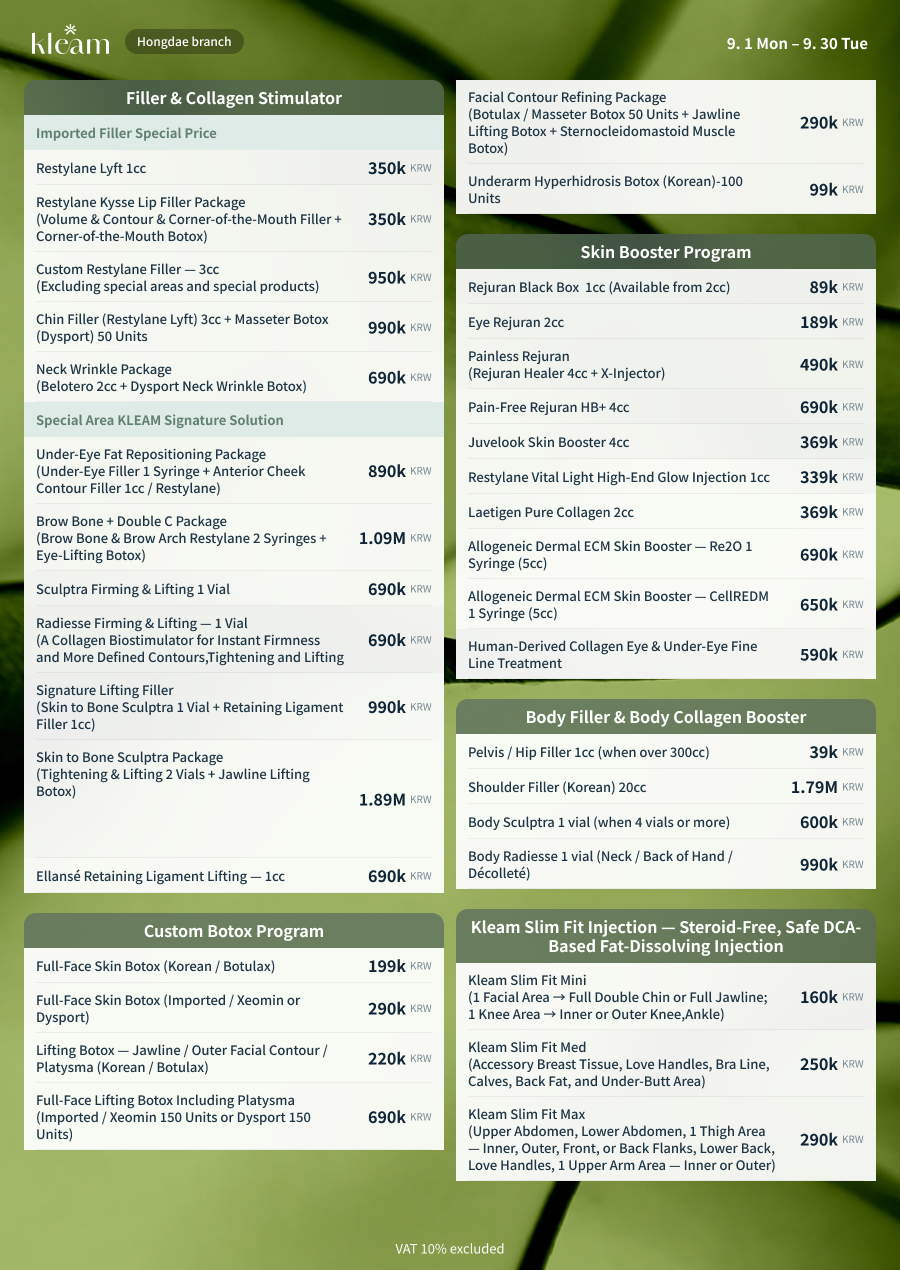
Prices vary with lines, shots or units, device generation, genuine tips, doctor involvement and area. 10% VAT is usually added to cosmetic procedures. Check the current price list, and compare across Seoul with Skin Clinic Cost in Korea: 2026 Price Guide for Foreigners.
Planning your visit to a skin clinic in Hongdae, Seoul
Hongik Univ. Station in Hongdae has AREX Airport Railroad trains straight to Gimpo Airport (about 15–20 minutes) and Incheon Airport (all-stop roughly 50–60 minutes), plus Line 2 and the Gyeongui–Jungang Line. Do not book a treatment that ends right before you need to leave for the airport.
- Language: ask for English- or Japanese-speaking staff.
- Consultation: many clinics take messages by WhatsApp or KakaoTalk. Send photos, your flight time and travel dates.
- Confirm details: who performs the treatment, the exact shots, units or cc, and whether VAT is included.
- Prices: check the current Hongdae clinic price list and ask about low-downtime options such as pico laser.
Leave a buffer before your flight, and plan extra time for airport check-in.
Frequently asked questions
Can I fly the same day as Botox?
Many people do, and Botox is generally considered flight-friendly. Waiting until the next day is a comfortable margin. Avoid lying face-down, rubbing the treated area or using tight eye masks on the forehead for the first hours, and skip saunas and intense exercise for 24–48 hours after.
Is it safe to fly after fillers?
Flying after fillers is generally possible, but swelling usually lasts 2–3 days and may feel more noticeable on a long flight. Many doctors suggest doing fillers 3–4 days before departure so the result can be checked and adjusted in person if needed. Tell the doctor your flight time.
Can I fly after laser treatment?
After gentle lasers such as toning or pico toning, flying the next day is usually fine. Use sunscreen and close the window shade. After Fraxel or Potenza, allow about 4–5 days for redness to settle; after CO2 fractional, about a week, because healing skin is more vulnerable to dryness and infection.
Does cabin pressure affect Ultherapy or Thermage results?
There is no reason to expect cabin pressure to affect results from Ultherapy, Thermage FLX, InMode or Shurink. These treatments have 0–1 day of downtime, and collagen remodeling builds over 2–3 months or longer. One day between treatment and flight is a comfortable buffer for any tenderness.
Can I get treated on the way to the airport?
Yes, if you plan carefully. Hongik Univ. Station is on the AREX line, so you can have a short low-downtime treatment and continue to Incheon or Gimpo. Plan where your luggage will go, confirm the appointment length in advance, leave generous travel time and avoid treatments that need a follow-up.
Related guides
This guide is general information for international visitors, not medical advice. A doctor confirms suitability, dosage and number of sessions at consultation. Prices are approximate Seoul market ranges and change over time — always check the clinic's current price list. Last updated: October 2026.